Stop The Traffik
Awareness Advertising Campaign
Overview
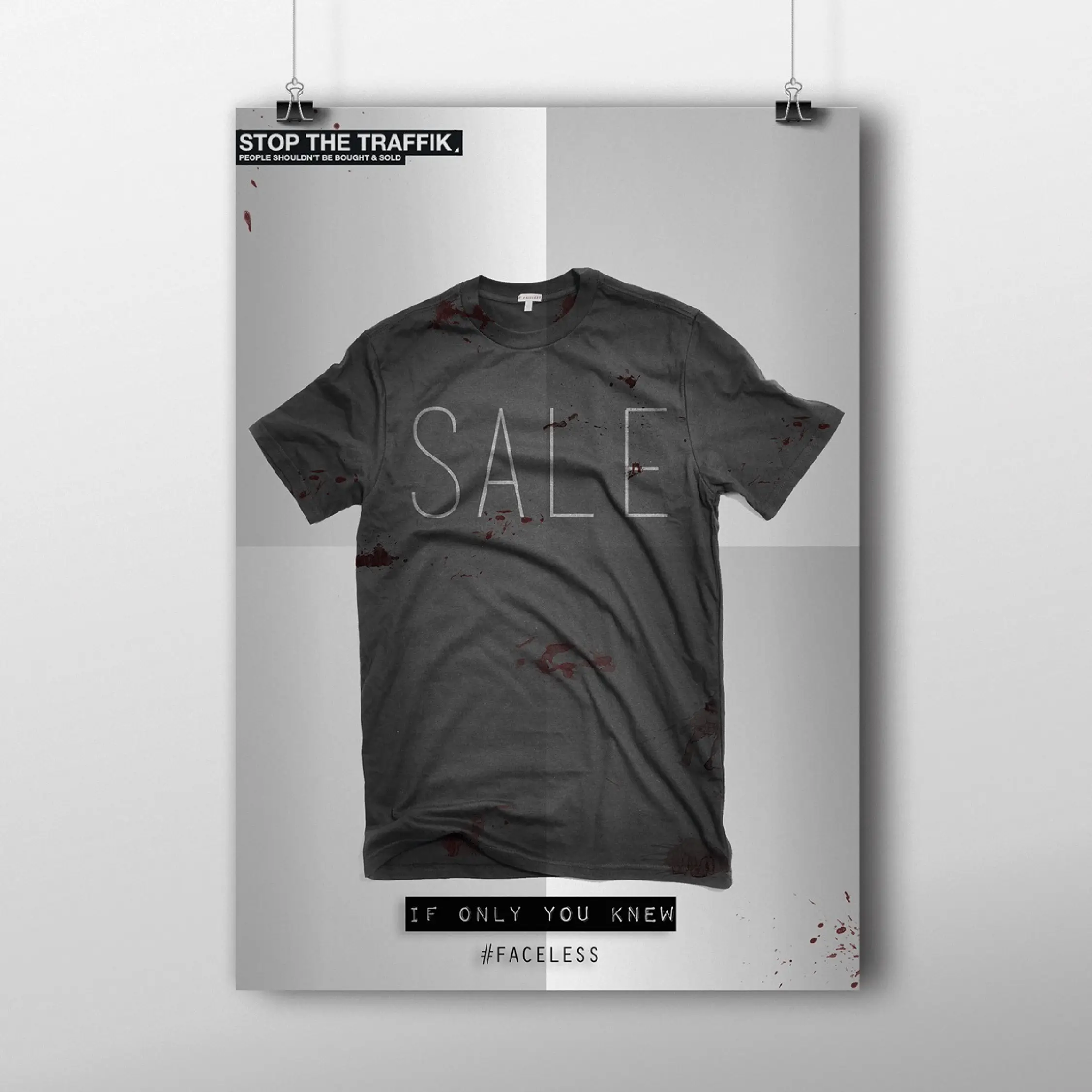
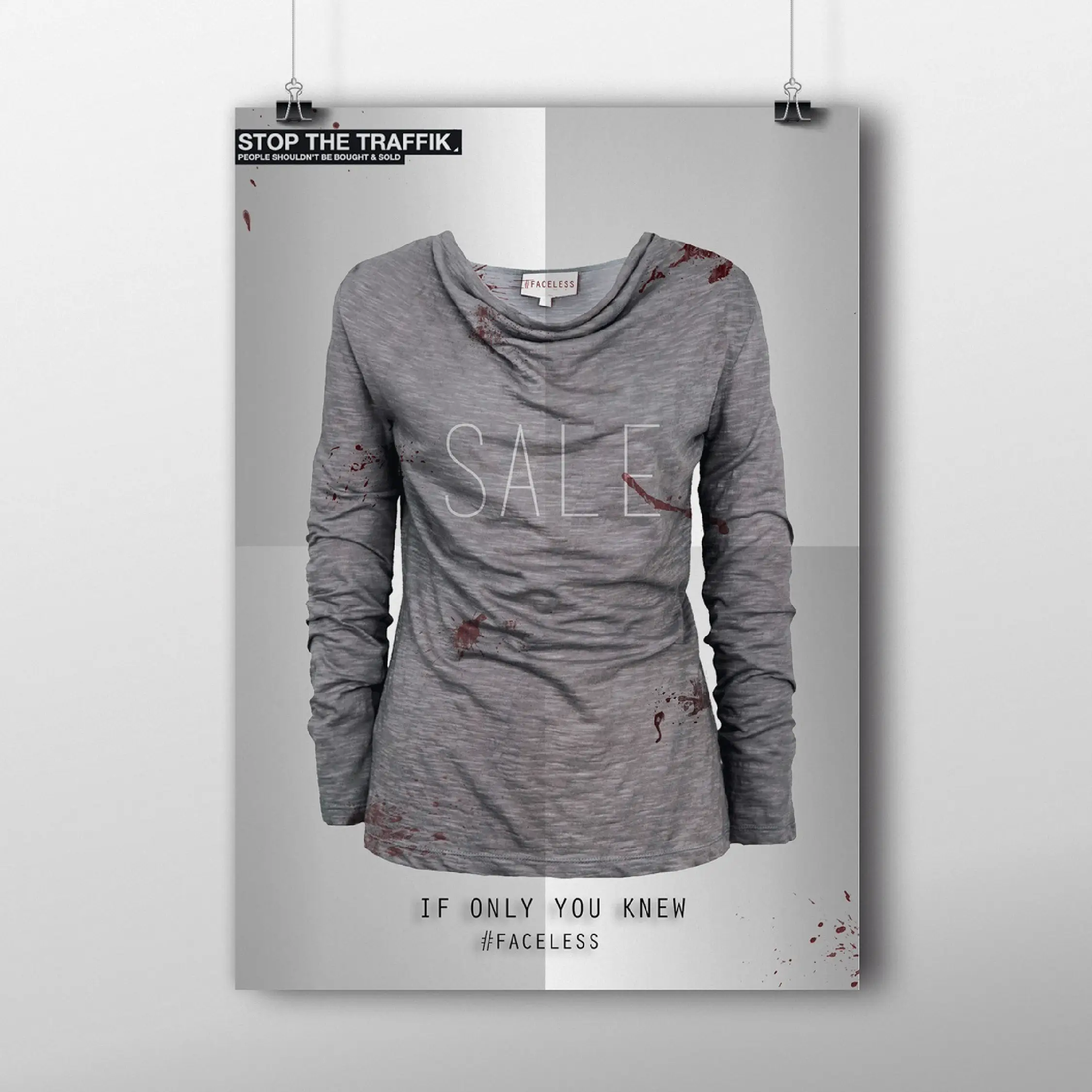
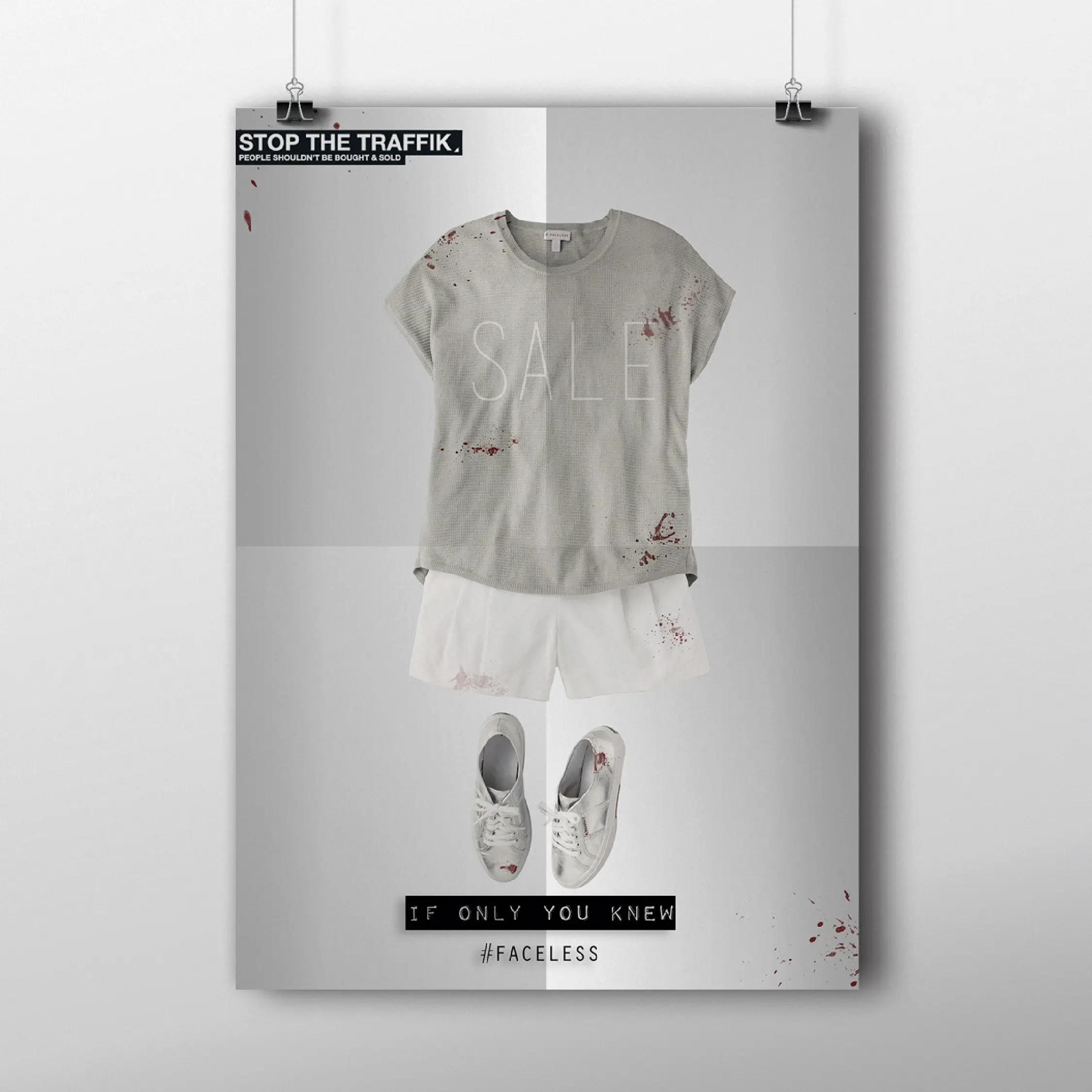
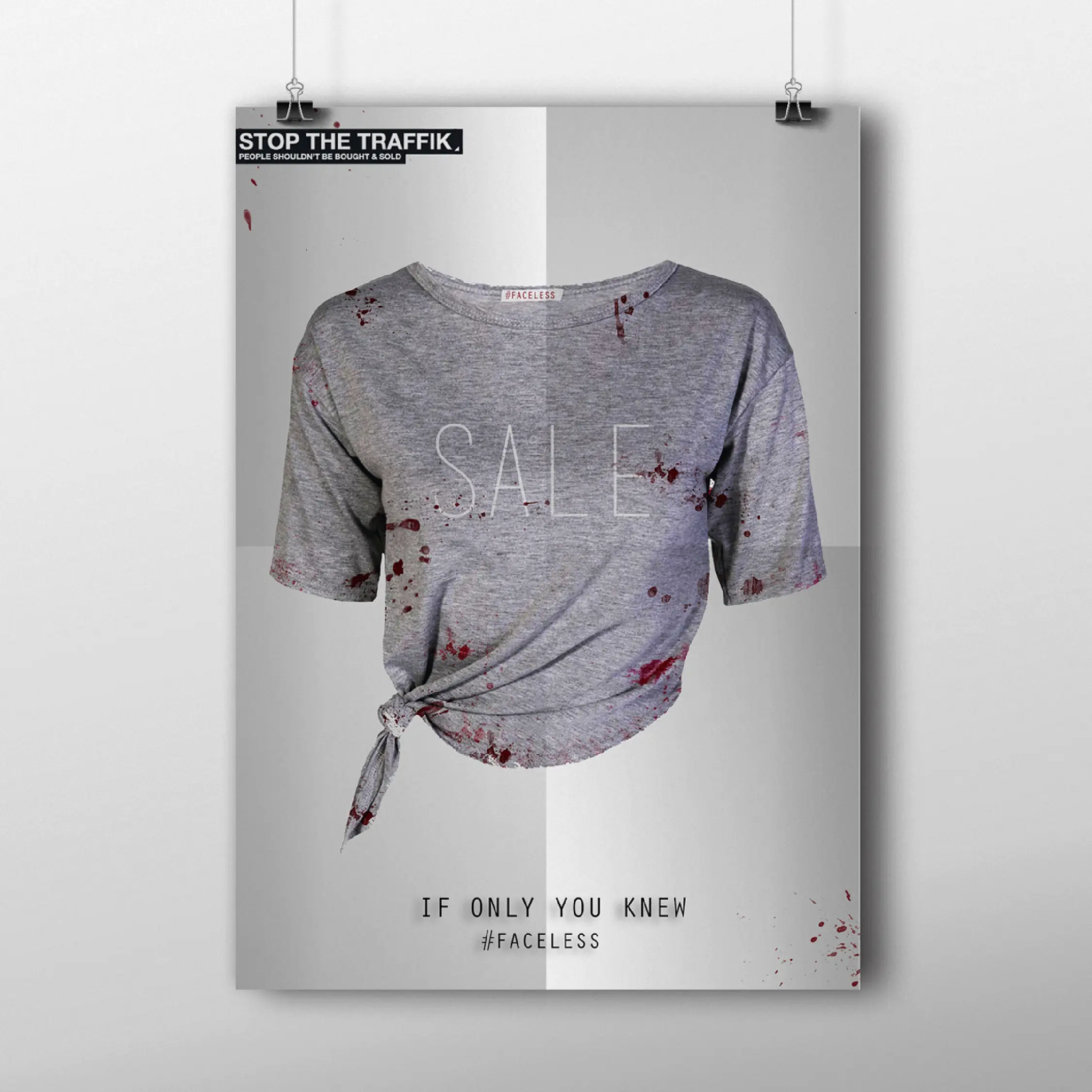
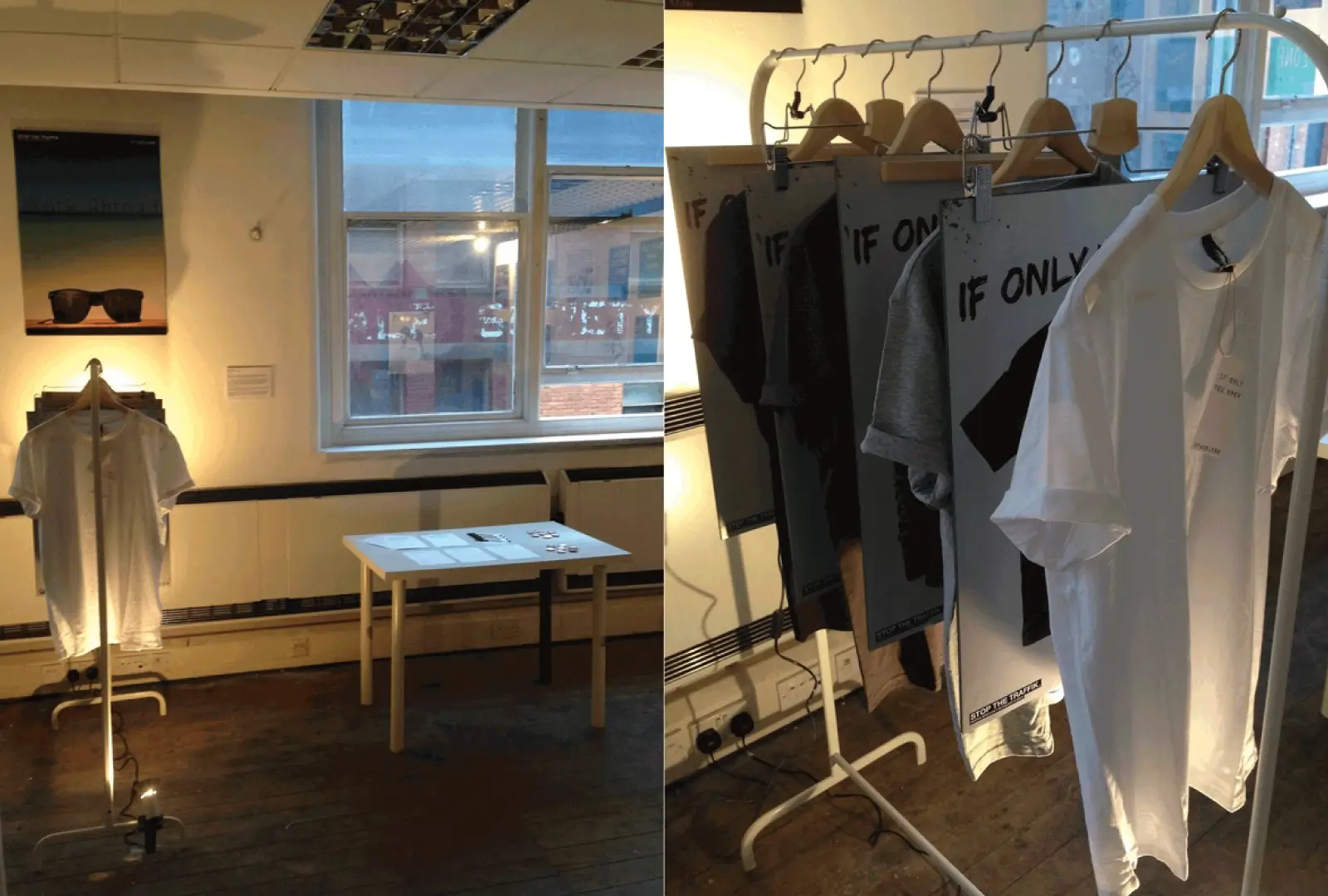
This advertising campaign was created to raise awareness of human trafficking and highlight how deeply embedded it is within everyday consumer culture. The project focuses on exposing the uncomfortable reality that many trafficked individuals are forced to work in sweatshops and that, often unknowingly, the public becomes an unwilling participant by purchasing goods produced through exploitation.

Design
Process
The Problem
Human trafficking is frequently perceived as distant or extreme, when in reality it is closely tied to everyday products and services. The true scale of the issue is often hidden behind appealing marketing, low prices, and convenience making it easy for people to overlook the human cost behind what they consume.
This campaign aims to confront that disconnect and challenge the assumption that trafficking only affects “other people.”
Campaign Message
The central message of the campaign is that anyone can be affected, and that exploitation often begins with something that appears harmless or even aspirational.
The work highlights two key realities:
Many trafficking victims are forced into labour within sweatshops and manufacturing industries
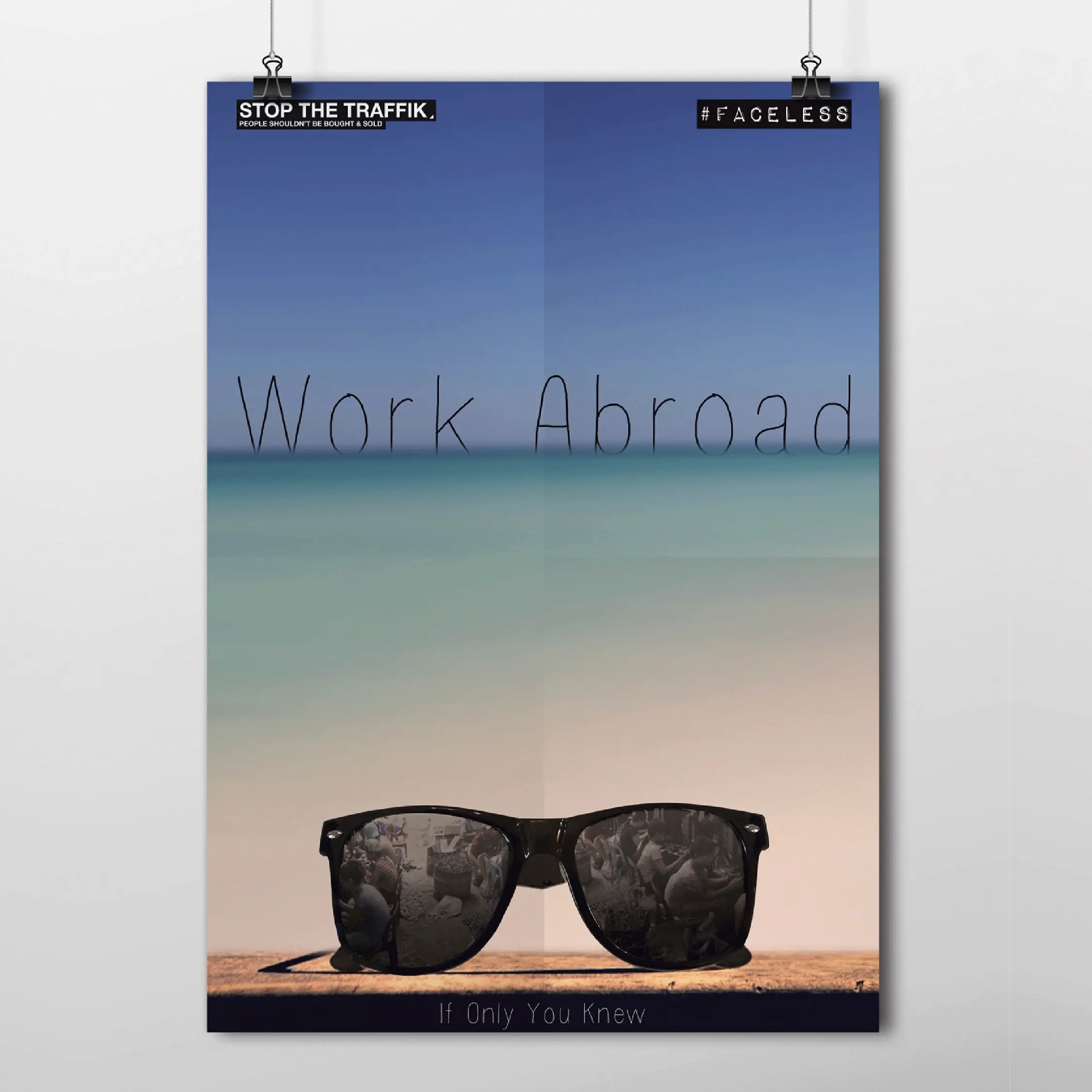
Recruitment often starts through deceptive job advertisements, promising travel, opportunity, and a better life
Concept & Approach
The campaign uses visual misdirection presenting familiar, trustworthy formats before revealing a darker truth.
Standalone Poster: “Work Abroad”
This poster mimics the visual language of legitimate job adverts promoting travel, freedom, and exciting opportunities overseas. On first glance, it feels positive and aspirational. However, closer inspection reveals unsettling details that expose the sinister reality behind the offer.Visual Strategy: Clean layouts, approachable typography, and recruitment-style imagery used deliberately to lower suspicion.
Narrative Device: Contrast between promise and reality encouraging viewers to look closer and question what they are seeing.
Emotional Impact: Designed to create discomfort through realisation rather than shock imagery.
Outcome
The final campaign highlights how easily traffickers manipulate trust and aspiration, and how quickly someone can become a victim or an unwitting contributor to human exploitation.
This project demonstrates my ability to:
Tackle sensitive, real-world issues through responsible design
Use familiar visual systems to challenge assumptions
Create awareness campaigns that rely on insight and storytelling rather than graphic imagery
Next
Project
Stop The Traffik
Awareness Advertising Campaign
Overview
This advertising campaign was created to raise awareness of human trafficking and highlight how deeply embedded it is within everyday consumer culture. The project focuses on exposing the uncomfortable reality that many trafficked individuals are forced to work in sweatshops and that, often unknowingly, the public becomes an unwilling participant by purchasing goods produced through exploitation.
Design
Process
The Problem
Human trafficking is frequently perceived as distant or extreme, when in reality it is closely tied to everyday products and services. The true scale of the issue is often hidden behind appealing marketing, low prices, and convenience making it easy for people to overlook the human cost behind what they consume.
This campaign aims to confront that disconnect and challenge the assumption that trafficking only affects “other people.”
Campaign Message
The central message of the campaign is that anyone can be affected, and that exploitation often begins with something that appears harmless or even aspirational.
The work highlights two key realities:
Many trafficking victims are forced into labour within sweatshops and manufacturing industries
Recruitment often starts through deceptive job advertisements, promising travel, opportunity, and a better life
Concept & Approach
The campaign uses visual misdirection presenting familiar, trustworthy formats before revealing a darker truth.
Standalone Poster: “Work Abroad”
This poster mimics the visual language of legitimate job adverts promoting travel, freedom, and exciting opportunities overseas. On first glance, it feels positive and aspirational. However, closer inspection reveals unsettling details that expose the sinister reality behind the offer.Visual Strategy: Clean layouts, approachable typography, and recruitment-style imagery used deliberately to lower suspicion.
Narrative Device: Contrast between promise and reality encouraging viewers to look closer and question what they are seeing.
Emotional Impact: Designed to create discomfort through realisation rather than shock imagery.
Outcome
The final campaign highlights how easily traffickers manipulate trust and aspiration, and how quickly someone can become a victim or an unwitting contributor to human exploitation.
This project demonstrates my ability to:
Tackle sensitive, real-world issues through responsible design
Use familiar visual systems to challenge assumptions
Create awareness campaigns that rely on insight and storytelling rather than graphic imagery
Next
Project
Stop The Traffik
Awareness Advertising Campaign
Overview
This advertising campaign was created to raise awareness of human trafficking and highlight how deeply embedded it is within everyday consumer culture. The project focuses on exposing the uncomfortable reality that many trafficked individuals are forced to work in sweatshops and that, often unknowingly, the public becomes an unwilling participant by purchasing goods produced through exploitation.
Design
Process
The Problem
Human trafficking is frequently perceived as distant or extreme, when in reality it is closely tied to everyday products and services. The true scale of the issue is often hidden behind appealing marketing, low prices, and convenience making it easy for people to overlook the human cost behind what they consume.
This campaign aims to confront that disconnect and challenge the assumption that trafficking only affects “other people.”
Campaign Message
The central message of the campaign is that anyone can be affected, and that exploitation often begins with something that appears harmless or even aspirational.
The work highlights two key realities:
Many trafficking victims are forced into labour within sweatshops and manufacturing industries
Recruitment often starts through deceptive job advertisements, promising travel, opportunity, and a better life
Concept & Approach
The campaign uses visual misdirection presenting familiar, trustworthy formats before revealing a darker truth.
Standalone Poster: “Work Abroad”
This poster mimics the visual language of legitimate job adverts promoting travel, freedom, and exciting opportunities overseas. On first glance, it feels positive and aspirational. However, closer inspection reveals unsettling details that expose the sinister reality behind the offer.Visual Strategy: Clean layouts, approachable typography, and recruitment-style imagery used deliberately to lower suspicion.
Narrative Device: Contrast between promise and reality encouraging viewers to look closer and question what they are seeing.
Emotional Impact: Designed to create discomfort through realisation rather than shock imagery.
Outcome
The final campaign highlights how easily traffickers manipulate trust and aspiration, and how quickly someone can become a victim or an unwitting contributor to human exploitation.
This project demonstrates my ability to:
Tackle sensitive, real-world issues through responsible design
Use familiar visual systems to challenge assumptions
Create awareness campaigns that rely on insight and storytelling rather than graphic imagery
Next
Project