freagra website
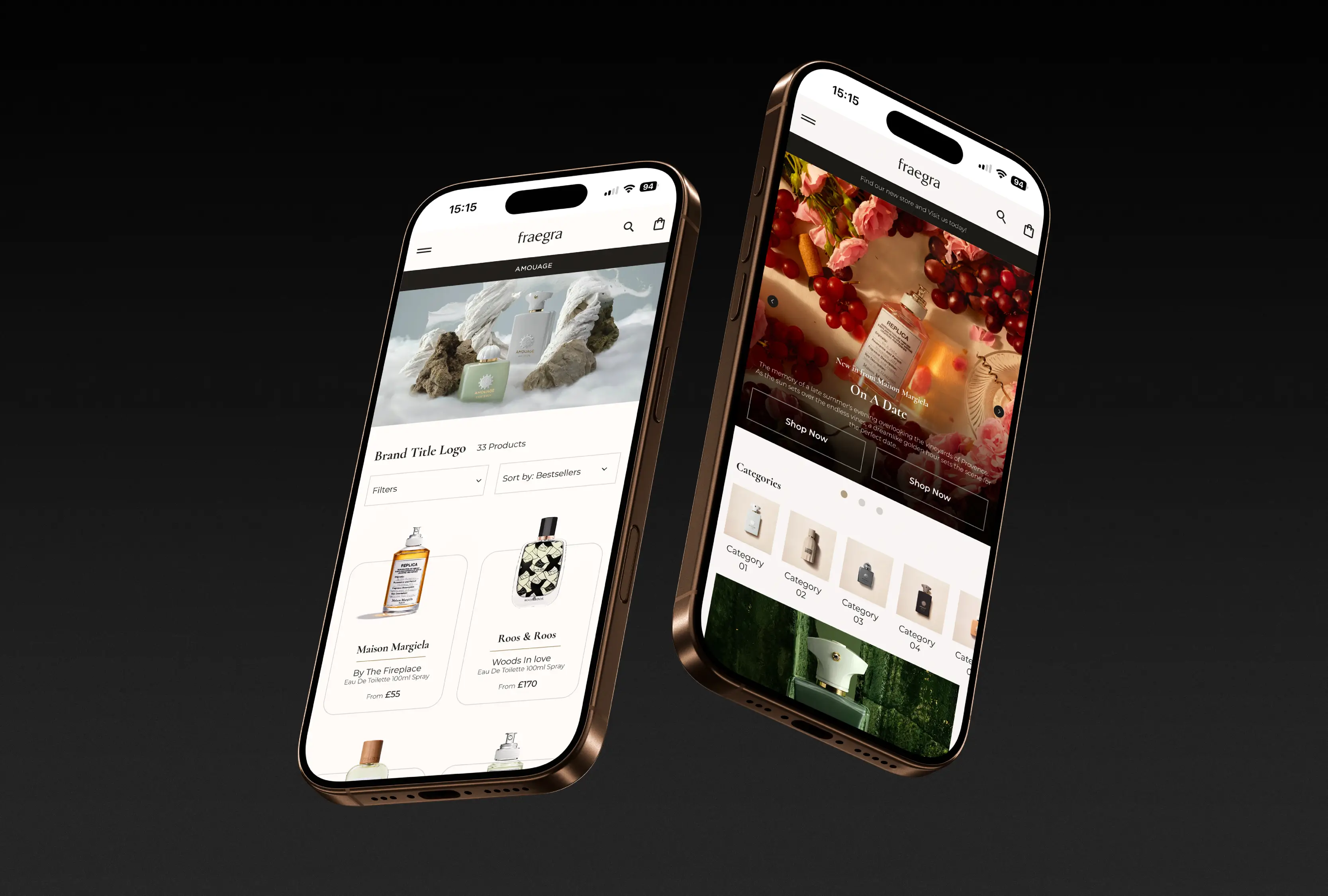
Led the end-to-end design of Fraegra, defining the UX, visual direction, and digital experience to help The Fragrance Shop compete in the luxury market.
Overview
Situation
Context & Opportunity
The Fragrance Shop operates successfully in the mass and mid-market fragrance space, but lacked a credible digital destination for luxury and high-value products.
Selling premium fragrances alongside mass-market SKUs diluted:
Brand perception
Luxury storytelling
Average order value potential
Fraegra was created as a new, standalone luxury brand giving the business a dedicated platform to:
Compete with established luxury retailers (Harrods, Creed, Jo Malone, Nose Paris)
Elevate perception without compromising the core Fragrance Shop brand
Build a scalable foundation for premium retail (online + physical boutiques)
The Problem to Solve
Designing luxury UX without relying on discount-led CRO patterns
Balancing brand storytelling with e-commerce clarity
Building trust for a new luxury retailer entering a competitive market
Creating a system that could scale across online and physical retail
Goals & Success Criteria
Business Goals
Establish Fraegra as a high-end fragrance retailer
Support both customer acquisition and long-term loyalty
Lay foundations to become a recognised player in the luxury market
UX Goals
Create a calm, confident, editorial experience
Remove friction without eroding perceived luxury
Design mobile-first, with desktop parity
Ensure the experience translates seamlessly into physical stores
My Role & Leadership
As Lead UX & Product Designer,
Owned UX, UI, and experience strategy
Set design principles and experience direction
Led collaboration with developers, brand, marketing, and leadership
Owned delivery from concept → build → phased rollout
Line-managed a UX designer and guided development execution
The core brand assets were provided, but experience, interaction, and visual direction were mine to define and operationalise.
Strategy & Frameworks Used
1. Luxury Experience Strategy
Situation: New brand, zero digital equity
Objectives: Premium perception, scalable commerce
Strategy: Editorial-led commerce with restrained conversion cues
Tactics: Content hierarchy, calm UI, deliberate pacing
Action: Phased rollout with continuous refinement
Control: CRO experimentation without undermining brand
This ensured decisions were intentional, not aesthetic-driven.
2. Acquisition & Storytelling
Luxury users don’t arrive ready to convert.
I designed journeys around:
Attention: Strong visual hierarchy, brand-first landing
Interest: Editorial product storytelling, provenance, scarcity cues
Desire: Discovery-led navigation, curated collections
Action: Clear but understated purchase paths
This supported both:
First-time luxury buyers
Existing fragrance enthusiasts trading up
3. CRO for Luxury
Rather than default e-commerce optimisation, I reframed CRO as: Reducing friction without reducing perceived value
Examples:
Simplified decision-making rather than aggressive CTAs
Trust signals through content, not badges
Progressive disclosure instead of information overload
This allowed experimentation without eroding brand equity.
Research & Insight
Methods
Competitor analysis (luxury & boutique fragrance)
Heuristic reviews of premium retail patterns
Qualitative insight from internal teams
Analytics-informed assumptions for MVP
Key insight:
Luxury users expect clarity but resent persuasion.
This insight directly shaped layout density, copy tone, and interaction patterns.
Design
Process
What I Delivered
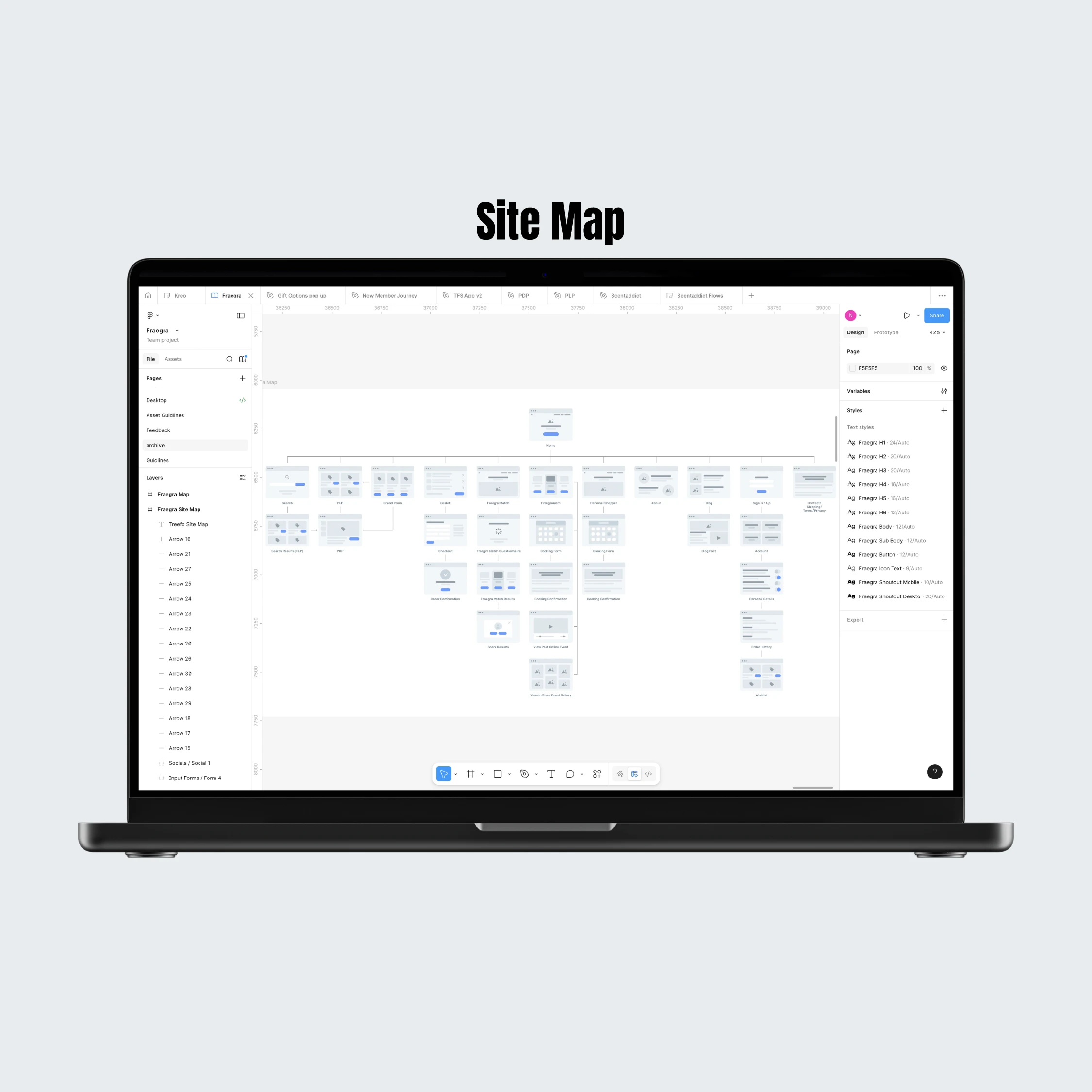
Mobile-first UX architecture
End-to-end UI design
Design system aligned to luxury principles
Developer-ready specifications
CRO experimentation framework
Full website delivery with phased enhancements
Build & Collaboration
Worked hands-on with developers throughout implementation
Balanced design intent with technical constraints
Constantly negotiated trade-offs to protect experience quality
(“developer wrangling” was a real and ongoing part of the role)
Outcomes
Project currently in progress
Strong stakeholder buy-in across leadership, brand, and marketing
Clear internal alignment that Fraegra feels distinct from The Fragrance Shop
Established a scalable foundation for:
Physical boutique rollout (e.g. King Street, Manchester)
Future optimisation and brand growth
Key Learnings
Luxury UX is about what you remove, not what you add
CRO principles must adapt to brand context
Senior design impact often comes from saying no, not shipping more
Building 0→1 brands requires as much stakeholder management as design craft
Why This Project Matters
This project demonstrates my ability to:
Lead 0→1 brand and product experiences
Balance commercial goals with brand integrity
Operate across strategy, design, delivery, and leadership
Design experiences appropriate for higher-value, higher-margin markets
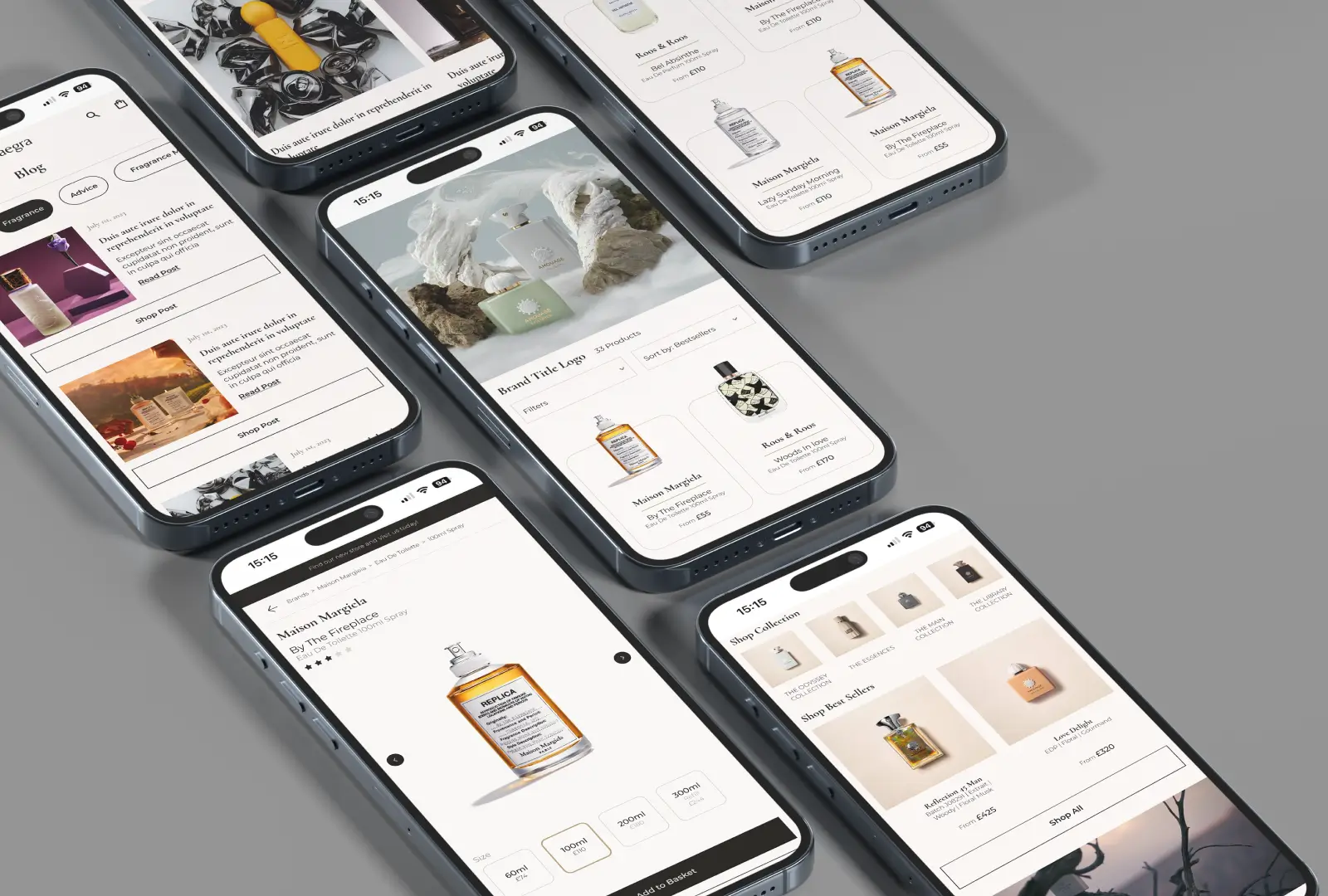
Top 5 UX Wins
To establish Fraegra as a credible luxury retailer, I led a series of experience-defining UX decisions that balanced brand storytelling with commercial clarity. Below are five of the most impactful UX wins delivered as part of the 0→1 build.
01
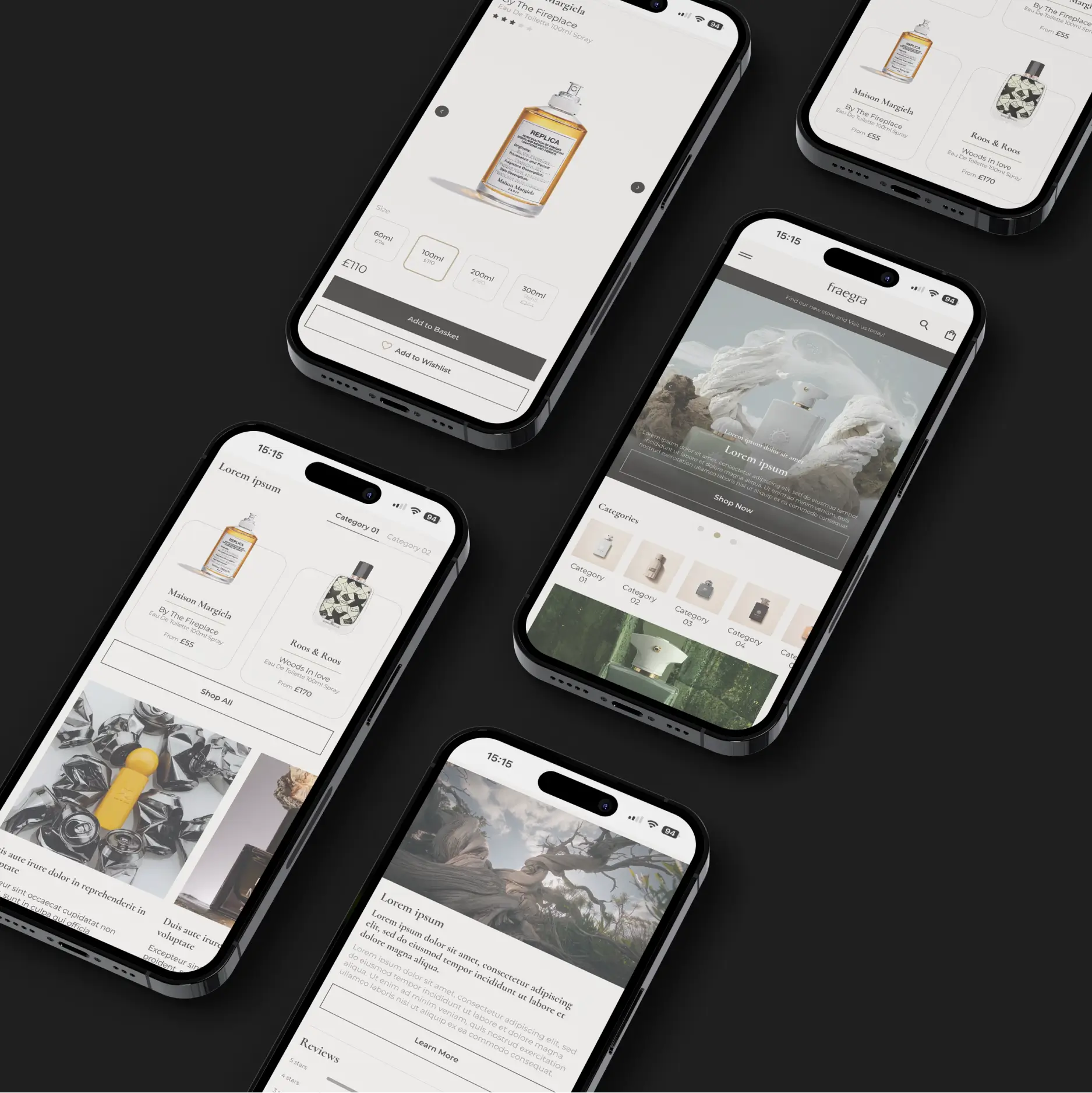
A Modern, Immersive First-Time Experience
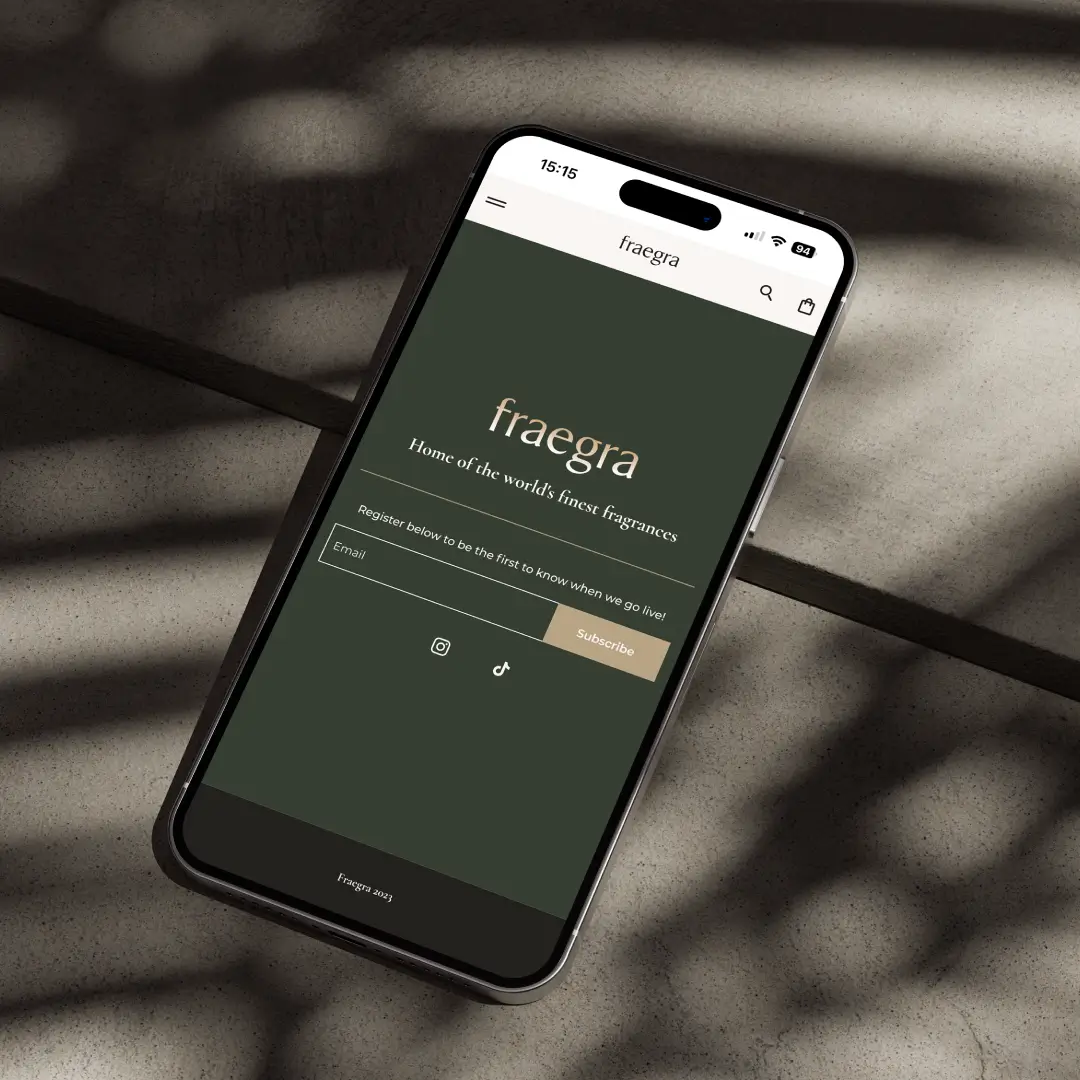
Designed a confident, editorial-led first-time experience that immediately signals luxury and credibility. The entry journey prioritises brand storytelling and visual calm, helping a new brand establish trust and emotional resonance from the first interaction.
Why it matters:
Luxury users decide whether to stay within seconds this experience was designed to invite exploration, not rush conversion.
02
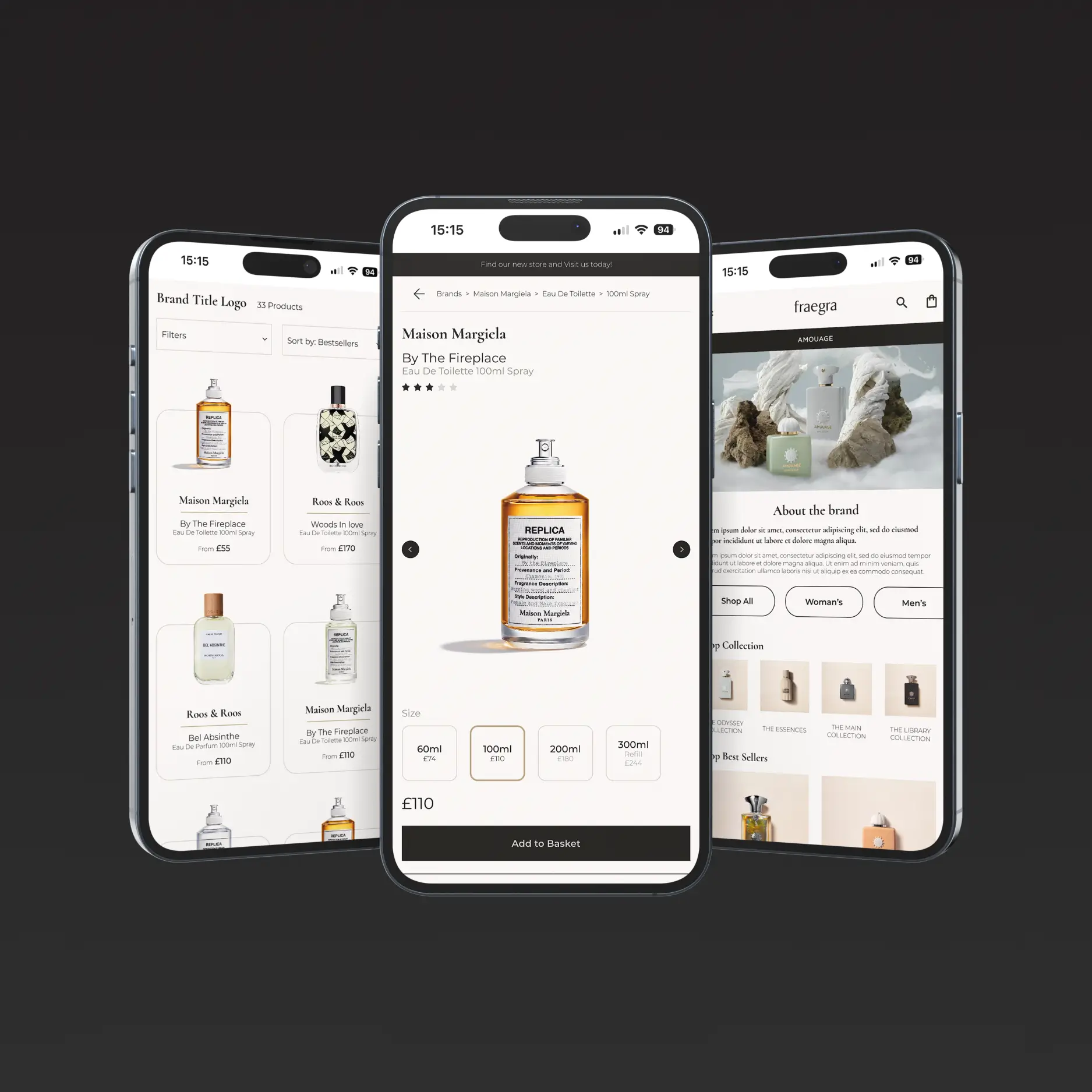
Simplified Journeys with High-Impact Visual Hierarchy
Reduced cognitive load across key journeys while elevating perceived luxury through large-format product imagery, restrained UI, and intentional spacing. Every interaction was designed to feel deliberate rather than transactional.
Why it matters:
Simplicity in luxury isn’t minimalism it’s confidence. This approach improves clarity without sacrificing premium feel.
03
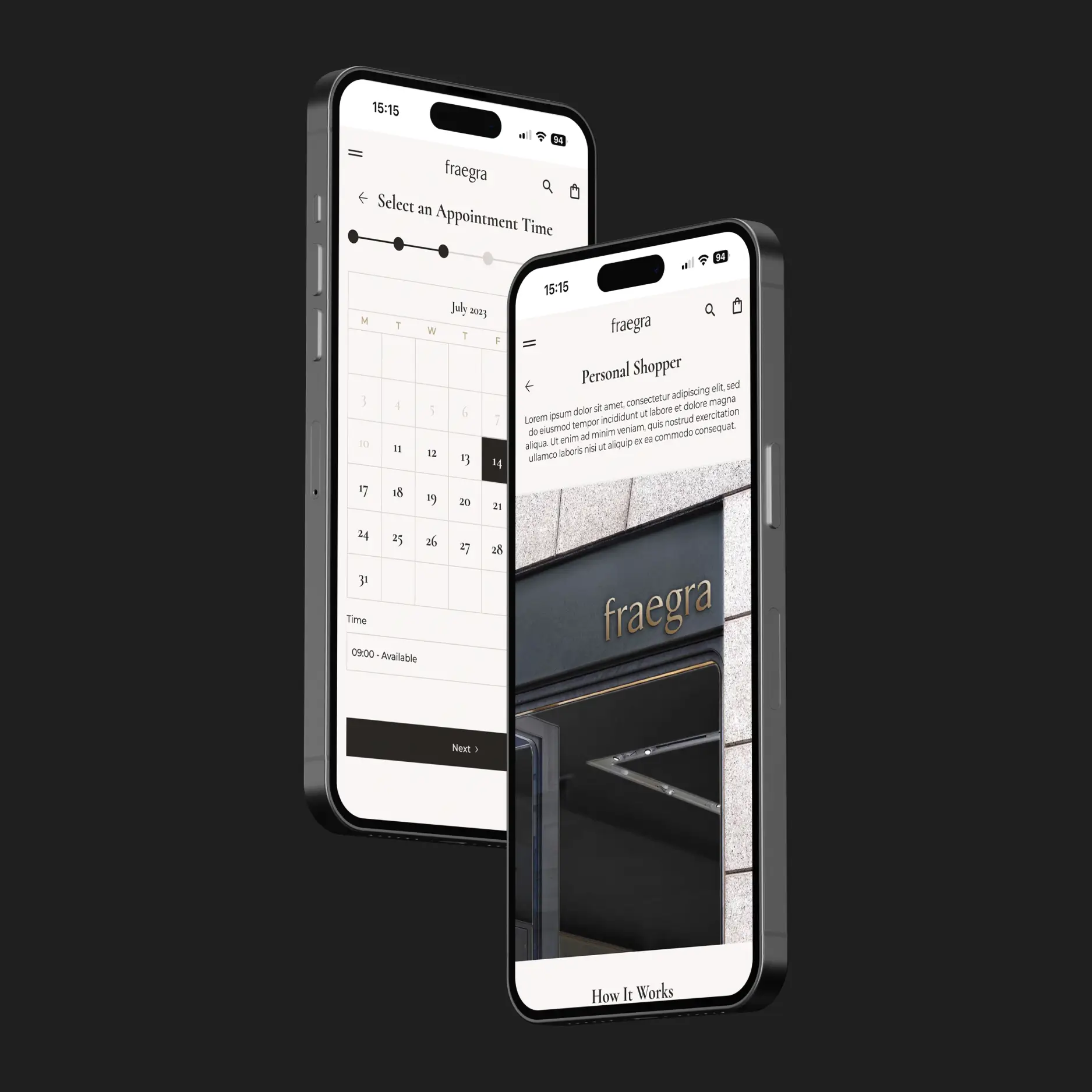
Boutique Personal Shopper Experience
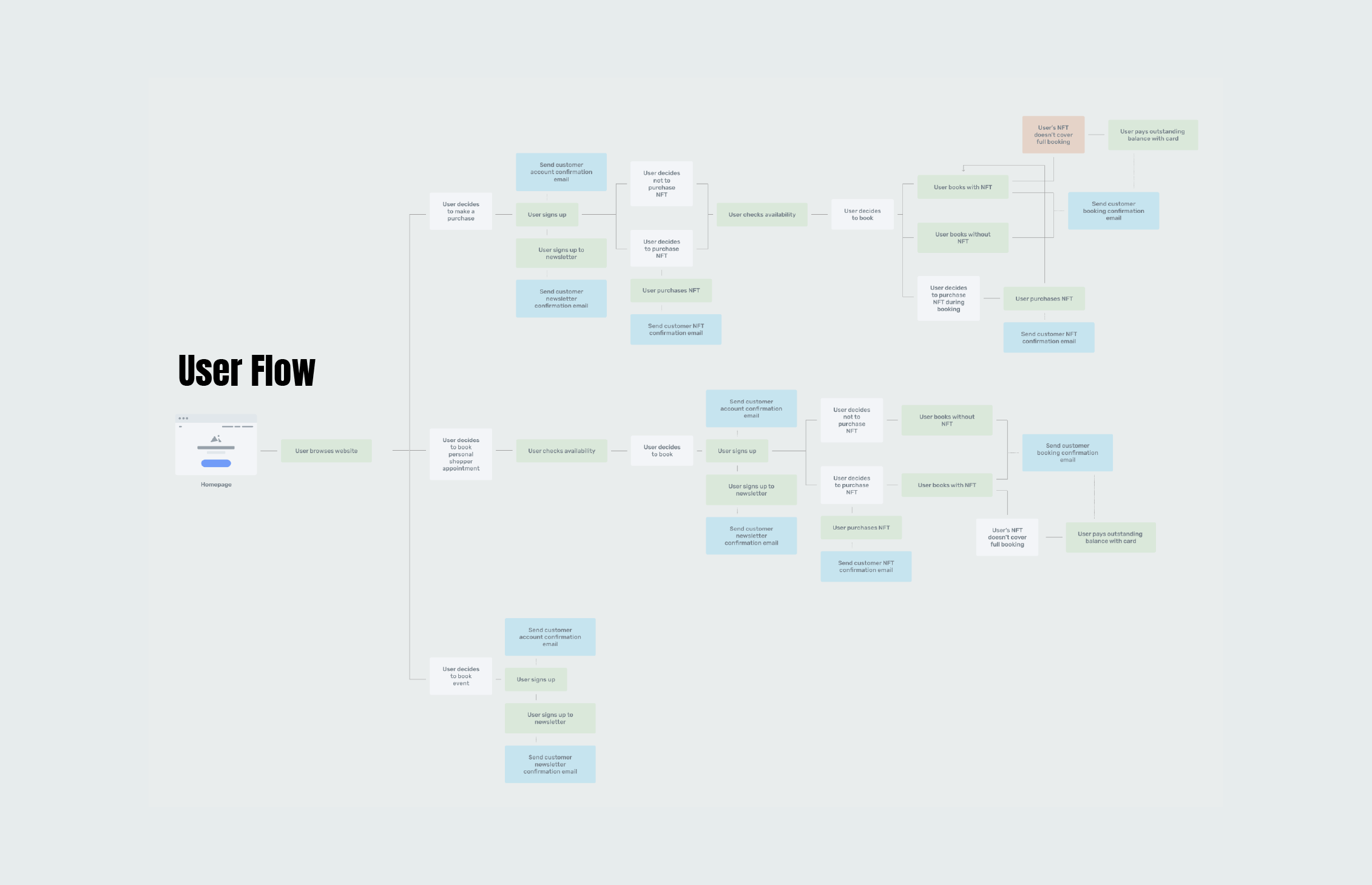
Introduced a personal shopper-style service tailored to high-end users who expect guidance, reassurance, and expertise when purchasing premium fragrances. This mirrors in-store luxury behaviours within a digital context.
Why it matters:
High-value users don’t want to self-serve blindly this feature increases trust, confidence, and long-term loyalty.
04
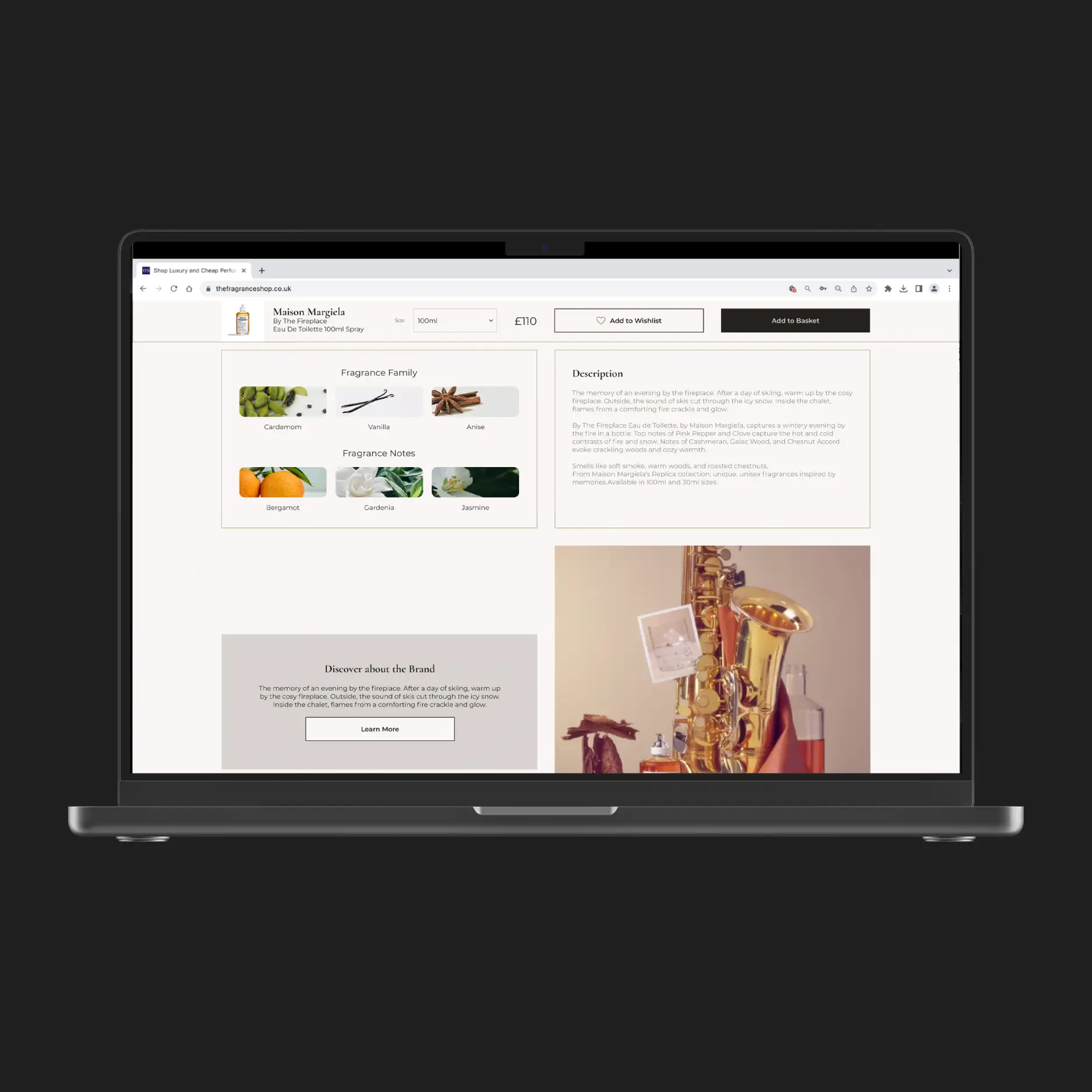
Fragrance Education Embedded into PDPs
Designed comprehensive fragrance notes and family overviews across all product detail pages, recognising that luxury and niche fragrances are often unfamiliar even to experienced buyers.
Why it matters:
This reduces purchase anxiety, supports discovery, and enables informed decision-making without forcing users to leave the site.
05
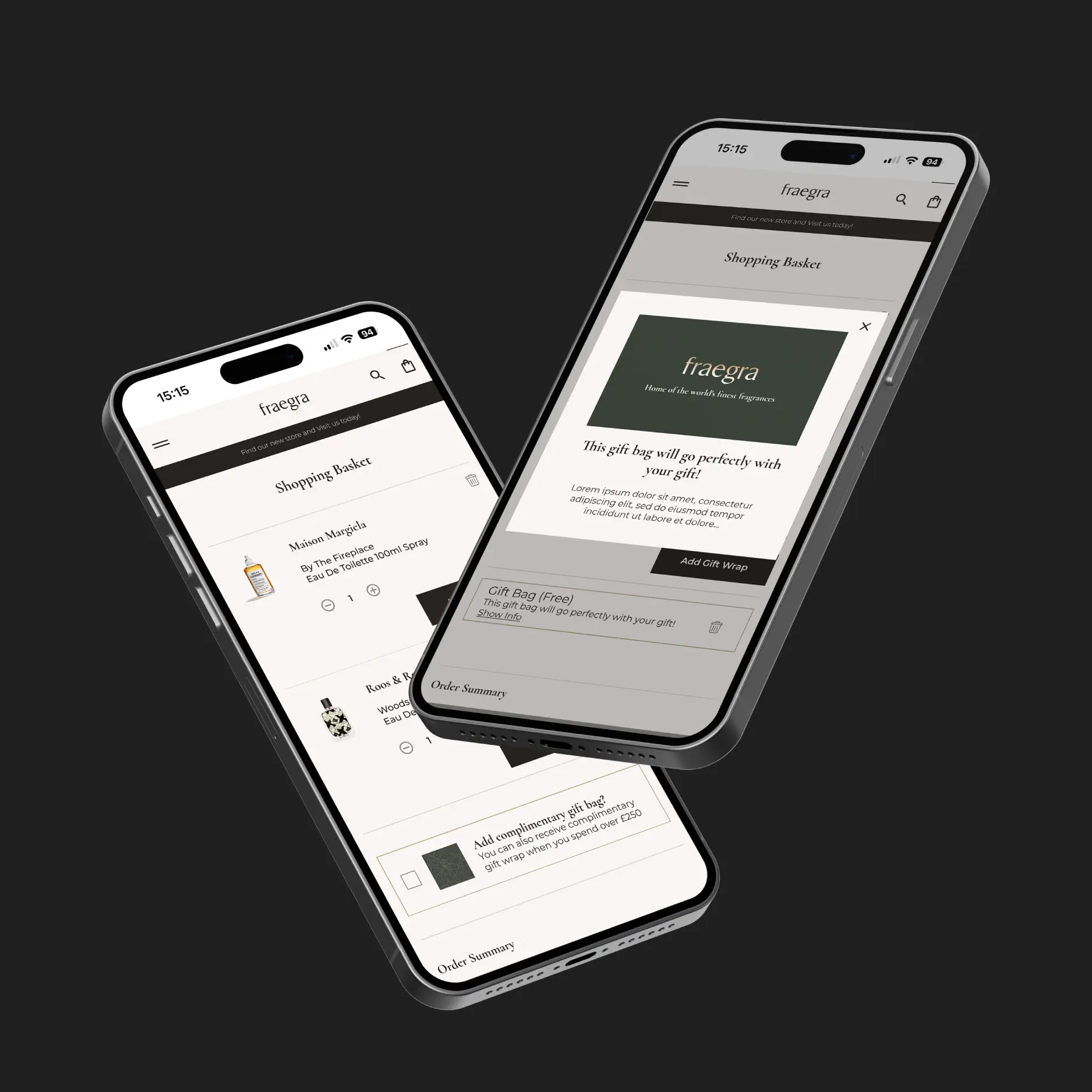
Elevated Basket & Checkout with Luxury Add-Ons
Transformed basket and checkout from a functional step into a brand moment, introducing optional gift wrapping and complimentary bags for every purchase aligning digital checkout with in-store luxury expectations.
Why it matters:
Checkout is often overlooked in luxury UX; this reinforces value perception at the most emotionally sensitive point of the journey.
Mobile
Prototype
Mobile
Prototype
This interactive mobile prototype demonstrates a focused end-to-end user journey.
Please note this is a design prototype, not a working site, and some interactions are out of scope.
Want to
see more?
Browse my other projects to explore how I approach UX, UI, and product design across a range of challenges.
End to End UX - Optimisation
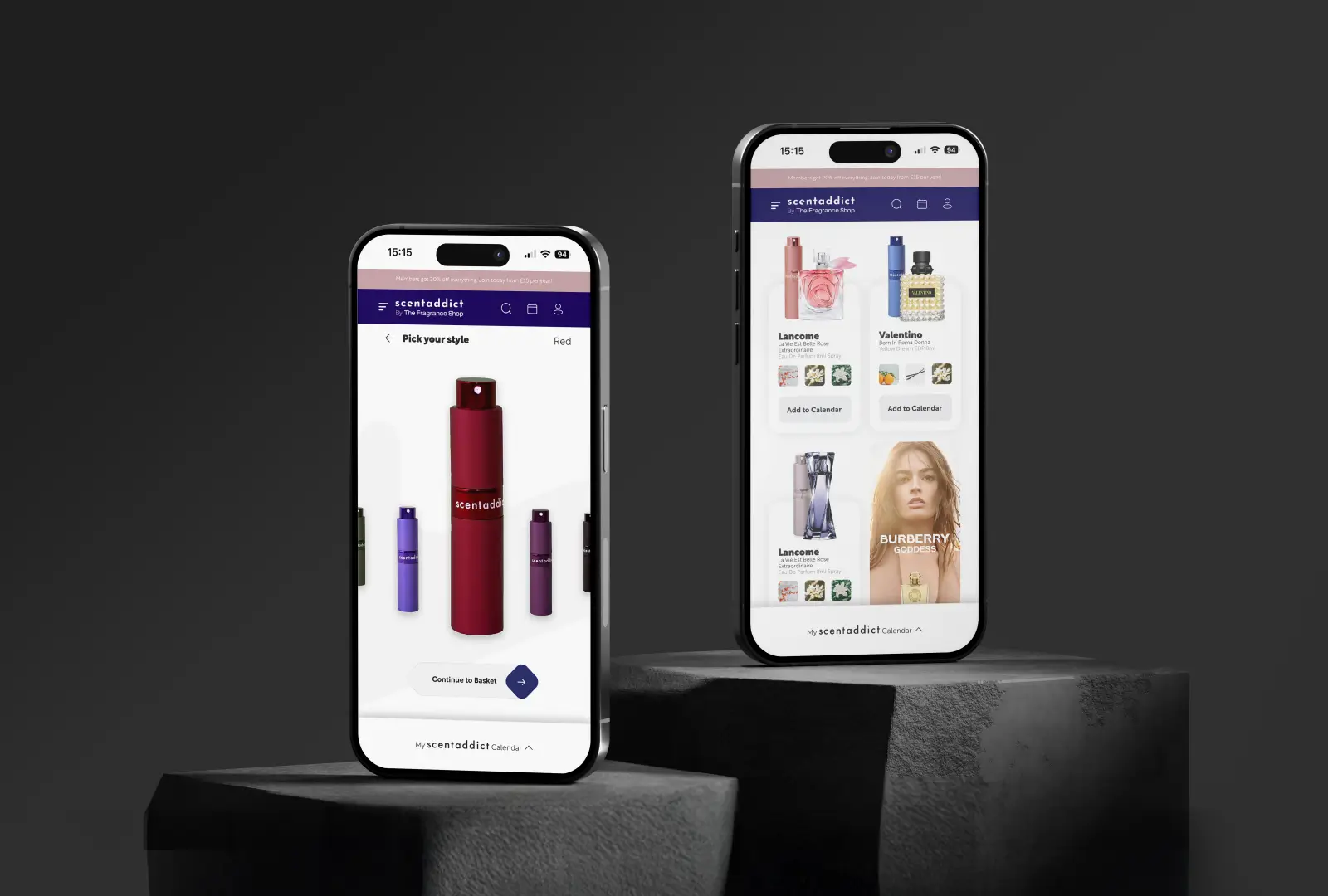
scentaddict
Redesigned the onboarding and subscription experience across mobile and desktop to create a clearer, more engaging journey.
freagra website
Led the end-to-end design of Fraegra, defining the UX, visual direction, and digital experience to help The Fragrance Shop compete in the luxury market.
Overview
Situation
Context & Opportunity
The Fragrance Shop operates successfully in the mass and mid-market fragrance space, but lacked a credible digital destination for luxury and high-value products.
Selling premium fragrances alongside mass-market SKUs diluted:
Brand perception
Luxury storytelling
Average order value potential
Fraegra was created as a new, standalone luxury brand giving the business a dedicated platform to:
Compete with established luxury retailers (Harrods, Creed, Jo Malone, Nose Paris)
Elevate perception without compromising the core Fragrance Shop brand
Build a scalable foundation for premium retail (online + physical boutiques)
The Problem to Solve
Designing luxury UX without relying on discount-led CRO patterns
Balancing brand storytelling with e-commerce clarity
Building trust for a new luxury retailer entering a competitive market
Creating a system that could scale across online and physical retail
Goals & Success Criteria
Business Goals
Establish Fraegra as a high-end fragrance retailer
Support both customer acquisition and long-term loyalty
Lay foundations to become a recognised player in the luxury market
UX Goals
Create a calm, confident, editorial experience
Remove friction without eroding perceived luxury
Design mobile-first, with desktop parity
Ensure the experience translates seamlessly into physical stores
My Role & Leadership
As Lead UX & Product Designer,
Owned UX, UI, and experience strategy
Set design principles and experience direction
Led collaboration with developers, brand, marketing, and leadership
Owned delivery from concept → build → phased rollout
Line-managed a UX designer and guided development execution
The core brand assets were provided, but experience, interaction, and visual direction were mine to define and operationalise.
Strategy & Frameworks Used
1. Luxury Experience Strategy
Situation: New brand, zero digital equity
Objectives: Premium perception, scalable commerce
Strategy: Editorial-led commerce with restrained conversion cues
Tactics: Content hierarchy, calm UI, deliberate pacing
Action: Phased rollout with continuous refinement
Control: CRO experimentation without undermining brand
This ensured decisions were intentional, not aesthetic-driven.
2. Acquisition & Storytelling
Luxury users don’t arrive ready to convert.
I designed journeys around:
Attention: Strong visual hierarchy, brand-first landing
Interest: Editorial product storytelling, provenance, scarcity cues
Desire: Discovery-led navigation, curated collections
Action: Clear but understated purchase paths
This supported both:
First-time luxury buyers
Existing fragrance enthusiasts trading up
3. CRO for Luxury
Rather than default e-commerce optimisation, I reframed CRO as: Reducing friction without reducing perceived value
Examples:
Simplified decision-making rather than aggressive CTAs
Trust signals through content, not badges
Progressive disclosure instead of information overload
This allowed experimentation without eroding brand equity.
Research & Insight
Methods
Competitor analysis (luxury & boutique fragrance)
Heuristic reviews of premium retail patterns
Qualitative insight from internal teams
Analytics-informed assumptions for MVP
Key insight:
Luxury users expect clarity but resent persuasion.
This insight directly shaped layout density, copy tone, and interaction patterns.
Design
Process
What I Delivered
Mobile-first UX architecture
End-to-end UI design
Design system aligned to luxury principles
Developer-ready specifications
CRO experimentation framework
Full website delivery with phased enhancements
Build & Collaboration
Worked hands-on with developers throughout implementation
Balanced design intent with technical constraints
Constantly negotiated trade-offs to protect experience quality
(“developer wrangling” was a real and ongoing part of the role)
Outcomes
Project currently in progress
Strong stakeholder buy-in across leadership, brand, and marketing
Clear internal alignment that Fraegra feels distinct from The Fragrance Shop
Established a scalable foundation for:
Physical boutique rollout (e.g. King Street, Manchester)
Future optimisation and brand growth
Key Learnings
Luxury UX is about what you remove, not what you add
CRO principles must adapt to brand context
Senior design impact often comes from saying no, not shipping more
Building 0→1 brands requires as much stakeholder management as design craft
Why This Project Matters
This project demonstrates my ability to:
Lead 0→1 brand and product experiences
Balance commercial goals with brand integrity
Operate across strategy, design, delivery, and leadership
Design experiences appropriate for higher-value, higher-margin markets
Top 5 UX Wins
To establish Fraegra as a credible luxury retailer, I led a series of experience-defining UX decisions that balanced brand storytelling with commercial clarity. Below are five of the most impactful UX wins delivered as part of the 0→1 build.
01
A Modern, Immersive First-Time Experience
Designed a confident, editorial-led first-time experience that immediately signals luxury and credibility. The entry journey prioritises brand storytelling and visual calm, helping a new brand establish trust and emotional resonance from the first interaction.
Why it matters:
Luxury users decide whether to stay within seconds this experience was designed to invite exploration, not rush conversion.
02
Simplified Journeys with High-Impact Visual Hierarchy
Reduced cognitive load across key journeys while elevating perceived luxury through large-format product imagery, restrained UI, and intentional spacing. Every interaction was designed to feel deliberate rather than transactional.
Why it matters:
Simplicity in luxury isn’t minimalism it’s confidence. This approach improves clarity without sacrificing premium feel.
03
Boutique Personal Shopper Experience
Introduced a personal shopper-style service tailored to high-end users who expect guidance, reassurance, and expertise when purchasing premium fragrances. This mirrors in-store luxury behaviours within a digital context.
Why it matters:
High-value users don’t want to self-serve blindly this feature increases trust, confidence, and long-term loyalty.
04
Fragrance Education Embedded into PDPs
Designed comprehensive fragrance notes and family overviews across all product detail pages, recognising that luxury and niche fragrances are often unfamiliar even to experienced buyers.
Why it matters:
This reduces purchase anxiety, supports discovery, and enables informed decision-making without forcing users to leave the site.
05
Elevated Basket & Checkout with Luxury Add-Ons
Transformed basket and checkout from a functional step into a brand moment, introducing optional gift wrapping and complimentary bags for every purchase aligning digital checkout with in-store luxury expectations.
Why it matters:
Checkout is often overlooked in luxury UX; this reinforces value perception at the most emotionally sensitive point of the journey.
Mobile
Prototype
Mobile
Prototype
This interactive mobile prototype demonstrates a focused end-to-end user journey.
Please note this is a design prototype, not a working site, and some interactions are out of scope.
Want to
see more?
Browse my other projects to explore how I approach UX, UI, and product design across a range of challenges.
End to End UX - Optimisation
scentaddict
Redesigned the onboarding and subscription experience across mobile and desktop to create a clearer, more engaging journey.
freagra website
Led the end-to-end design of Fraegra, defining the UX, visual direction, and digital experience to help The Fragrance Shop compete in the luxury market.
Overview
Situation
Context & Opportunity
The Fragrance Shop operates successfully in the mass and mid-market fragrance space, but lacked a credible digital destination for luxury and high-value products.
Selling premium fragrances alongside mass-market SKUs diluted:
Brand perception
Luxury storytelling
Average order value potential
Fraegra was created as a new, standalone luxury brand giving the business a dedicated platform to:
Compete with established luxury retailers (Harrods, Creed, Jo Malone, Nose Paris)
Elevate perception without compromising the core Fragrance Shop brand
Build a scalable foundation for premium retail (online + physical boutiques)
The Problem to Solve
Designing luxury UX without relying on discount-led CRO patterns
Balancing brand storytelling with e-commerce clarity
Building trust for a new luxury retailer entering a competitive market
Creating a system that could scale across online and physical retail
Goals & Success Criteria
Business Goals
Establish Fraegra as a high-end fragrance retailer
Support both customer acquisition and long-term loyalty
Lay foundations to become a recognised player in the luxury market
UX Goals
Create a calm, confident, editorial experience
Remove friction without eroding perceived luxury
Design mobile-first, with desktop parity
Ensure the experience translates seamlessly into physical stores
My Role & Leadership
As Lead UX & Product Designer,
Owned UX, UI, and experience strategy
Set design principles and experience direction
Led collaboration with developers, brand, marketing, and leadership
Owned delivery from concept → build → phased rollout
Line-managed a UX designer and guided development execution
The core brand assets were provided, but experience, interaction, and visual direction were mine to define and operationalise.
Strategy & Frameworks Used
1. Luxury Experience Strategy
Situation: New brand, zero digital equity
Objectives: Premium perception, scalable commerce
Strategy: Editorial-led commerce with restrained conversion cues
Tactics: Content hierarchy, calm UI, deliberate pacing
Action: Phased rollout with continuous refinement
Control: CRO experimentation without undermining brand
This ensured decisions were intentional, not aesthetic-driven.
2. Acquisition & Storytelling
Luxury users don’t arrive ready to convert.
I designed journeys around:
Attention: Strong visual hierarchy, brand-first landing
Interest: Editorial product storytelling, provenance, scarcity cues
Desire: Discovery-led navigation, curated collections
Action: Clear but understated purchase paths
This supported both:
First-time luxury buyers
Existing fragrance enthusiasts trading up
3. CRO for Luxury
Rather than default e-commerce optimisation, I reframed CRO as: Reducing friction without reducing perceived value
Examples:
Simplified decision-making rather than aggressive CTAs
Trust signals through content, not badges
Progressive disclosure instead of information overload
This allowed experimentation without eroding brand equity.
Research & Insight
Methods
Competitor analysis (luxury & boutique fragrance)
Heuristic reviews of premium retail patterns
Qualitative insight from internal teams
Analytics-informed assumptions for MVP
Key insight:
Luxury users expect clarity but resent persuasion.
This insight directly shaped layout density, copy tone, and interaction patterns.
Design
Process
What I Delivered
Mobile-first UX architecture
End-to-end UI design
Design system aligned to luxury principles
Developer-ready specifications
CRO experimentation framework
Full website delivery with phased enhancements
Build & Collaboration
Worked hands-on with developers throughout implementation
Balanced design intent with technical constraints
Constantly negotiated trade-offs to protect experience quality
(“developer wrangling” was a real and ongoing part of the role)
Outcomes
Project currently in progress
Strong stakeholder buy-in across leadership, brand, and marketing
Clear internal alignment that Fraegra feels distinct from The Fragrance Shop
Established a scalable foundation for:
Physical boutique rollout (e.g. King Street, Manchester)
Future optimisation and brand growth
Key Learnings
Luxury UX is about what you remove, not what you add
CRO principles must adapt to brand context
Senior design impact often comes from saying no, not shipping more
Building 0→1 brands requires as much stakeholder management as design craft
Why This Project Matters
This project demonstrates my ability to:
Lead 0→1 brand and product experiences
Balance commercial goals with brand integrity
Operate across strategy, design, delivery, and leadership
Design experiences appropriate for higher-value, higher-margin markets
Top 5 UX Wins
To establish Fraegra as a credible luxury retailer, I led a series of experience-defining UX decisions that balanced brand storytelling with commercial clarity. Below are five of the most impactful UX wins delivered as part of the 0→1 build.
01
A Modern, Immersive First-Time Experience
Designed a confident, editorial-led first-time experience that immediately signals luxury and credibility. The entry journey prioritises brand storytelling and visual calm, helping a new brand establish trust and emotional resonance from the first interaction.
Why it matters:
Luxury users decide whether to stay within seconds this experience was designed to invite exploration, not rush conversion.
02
Simplified Journeys with High-Impact Visual Hierarchy
Reduced cognitive load across key journeys while elevating perceived luxury through large-format product imagery, restrained UI, and intentional spacing. Every interaction was designed to feel deliberate rather than transactional.
Why it matters:
Simplicity in luxury isn’t minimalism it’s confidence. This approach improves clarity without sacrificing premium feel.
03
Boutique Personal Shopper Experience
Introduced a personal shopper-style service tailored to high-end users who expect guidance, reassurance, and expertise when purchasing premium fragrances. This mirrors in-store luxury behaviours within a digital context.
Why it matters:
High-value users don’t want to self-serve blindly this feature increases trust, confidence, and long-term loyalty.
04
Fragrance Education Embedded into PDPs
Designed comprehensive fragrance notes and family overviews across all product detail pages, recognising that luxury and niche fragrances are often unfamiliar even to experienced buyers.
Why it matters:
This reduces purchase anxiety, supports discovery, and enables informed decision-making without forcing users to leave the site.
05
Elevated Basket & Checkout with Luxury Add-Ons
Transformed basket and checkout from a functional step into a brand moment, introducing optional gift wrapping and complimentary bags for every purchase aligning digital checkout with in-store luxury expectations.
Why it matters:
Checkout is often overlooked in luxury UX; this reinforces value perception at the most emotionally sensitive point of the journey.
Mobile
Prototype
Mobile
Prototype
This interactive mobile prototype demonstrates a focused end-to-end user journey.
Please note this is a design prototype, not a working site, and some interactions are out of scope.
Want to
see more?
Browse my other projects to explore how I approach UX, UI, and product design across a range of challenges.
End to End UX - Optimisation
scentaddict
Redesigned the onboarding and subscription experience across mobile and desktop to create a clearer, more engaging journey.