Find My Food app
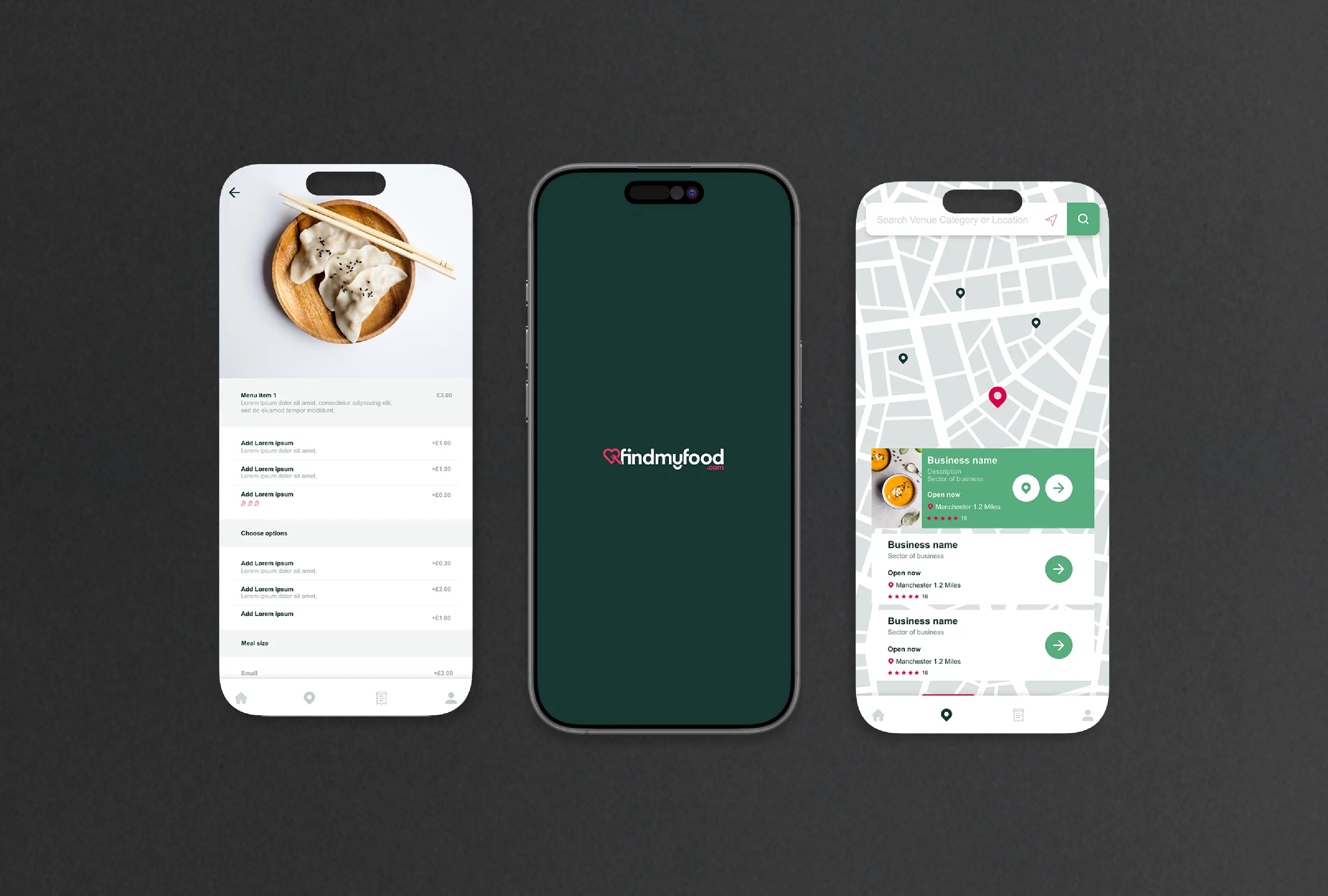
Designed Find My Food from the ground up shaping its brand identity, user flows, and UI to make discovering and ordering meals simple, intuitive, and enjoyable.
Overview
Situation
Context
My role
I acted as Product Owner and Lead UX / UI Designer, with full ownership across:
Product strategy & vision
UX research & journey design
UI design & interaction patterns
Brand creation from the ground up
Collaboration with founders and developers
I worked closely with the founders to define product-market fit, prioritise features, and design an experience capable of competing with Uber Eats, Deliveroo, and Just Eat.
Level of ownership
Defined the end-to-end experience for both customers and restaurants
Balanced business goals, technical constraints, and usability
Made prioritisation decisions under tight timelines and limited data
Designed the entire ecosystem, not just screens
This was effectively a 0→1 product, requiring both strategic thinking and hands-on execution.
Situation Analysis
Market landscape
The food-tech space was highly saturated, dominated by platforms focused almost exclusively on delivery.
Competitors:
Uber Eats
Deliveroo
Just Eat
Key gap in the market
Existing platforms:
Fragmented the customer journey
Prioritised delivery over dining experiences
Created operational overhead for restaurants (multiple tools for menus, bookings, QR ordering, delivery)
Opportunity
Create a single, seamless platform that supports:
Customers: delivery, pickup, reservations, dine-in menus, QR ordering
Restaurants: menu management, table bookings, order management, and customer engagement all in one system
Core Problems to Solve
Customer-side problems
Multiple apps needed for different dining needs
Friction between booking, ordering, and dining
Poor in-restaurant digital experiences
Limited discovery beyond delivery listings
Restaurant-side problems
Disconnected systems for:
Bookings
Menus
Delivery platforms
High onboarding friction
Limited control over branding and customer experience
Operational inefficiencies during busy service periods
Strategic problem
How do we differentiate against billion-pound competitors without competing purely on scale or price?
Objectives
Even without hard metrics (due to COVID and early stage), we defined clear directional goals:
Customer goals
Reduce friction across booking → ordering → dining
Increase conversion through simplified journeys
Improve retention by becoming a “default” food app
Restaurant goals
Simplify onboarding and daily operations
Reduce dependency on multiple third-party tools
Improve table utilisation and order management
Business goals
Position FMF as a one-stop ecosystem
Differentiate clearly vs Uber Eats / Deliveroo
Build long-term platform stickiness on both sides
Strategy
Product strategy
Rather than competing on delivery speed, FMF focused on:
Experience breadth
Journey continuity
Operational simplicity
Key strategic pillars
One platform, multiple use cases
Equal focus on customers and restaurants
Consistent UX across delivery, booking, and dine-in
Low learning curve despite feature richness
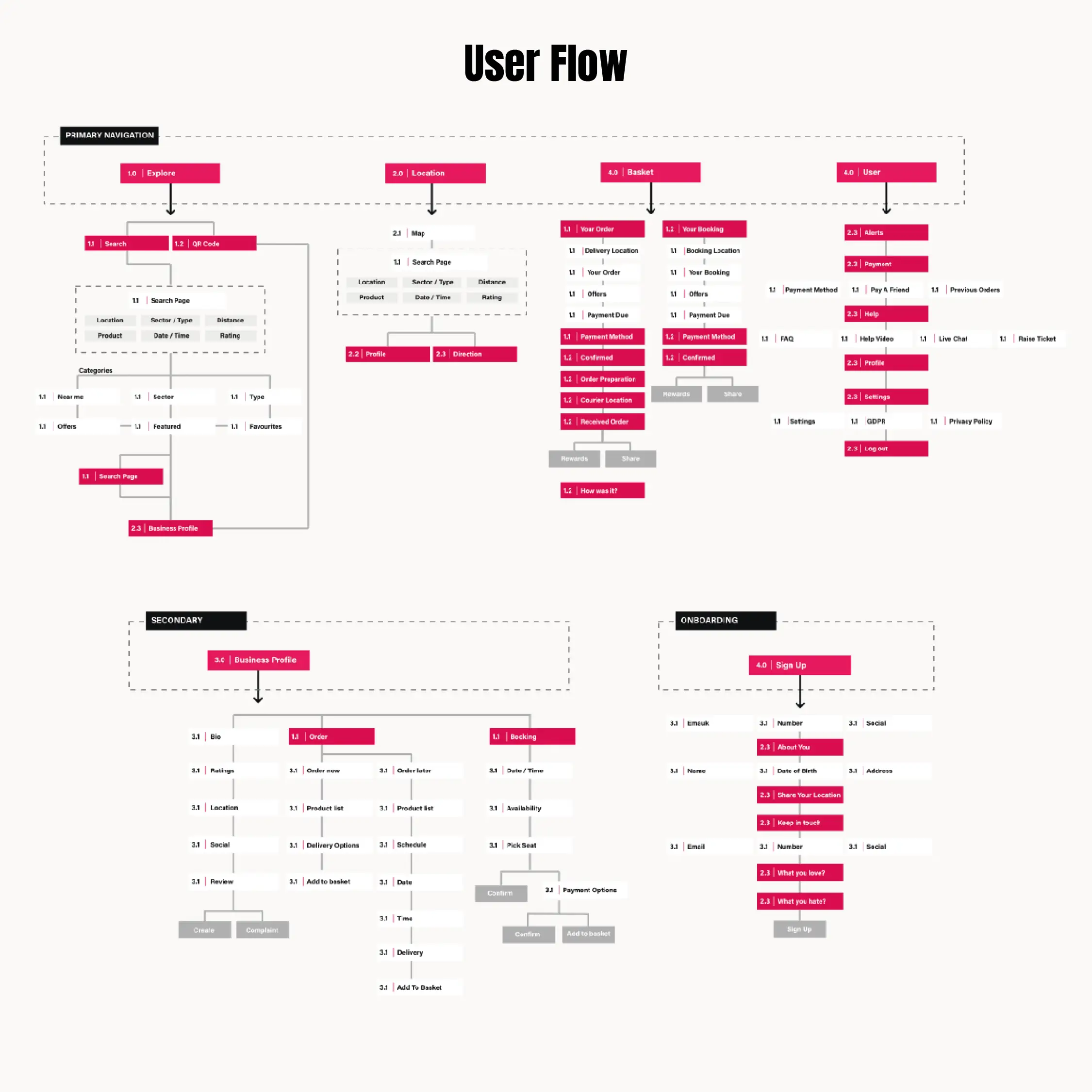
User Journey & Experience Design
Reach – Discovery & Entry
Unified search for:
Restaurants
Cuisine
Delivery / pickup / dine-in
Smart filters based on intent (eat now vs book later)
Clear value proposition from first interaction
Act – Engagement
Browse menus before booking or ordering
View availability and book tables seamlessly
QR code scanning for instant in-restaurant access
Reduced decision fatigue through progressive disclosure
Convert – Ordering & Booking
Single checkout logic across:
Delivery
Pickup
Dine-in pre-orders
Familiar patterns to reduce cognitive load
Clear feedback and confirmation states
Engage – Retention & Loyalty
Favourites & saved restaurants
Account history across all dining types
Designed foundations for loyalty and repeat usage
Design
Process
Features I Led & Designed
I was responsible for the full product experience, including:
Customer-facing
Search & discovery
Filtering & intent-based navigation
Booking flow
Delivery & pickup ordering
QR menu experience
Checkout & order confirmation
Account, favourites, and history
End-to-end journey mapping
Restaurant-facing
Menu creation & management
Booking and table organisation
Order visibility and status
Dashboard information architecture
Scalable patterns for future features
Prioritisation & Decision-Making
Given:
3-month deadline
Limited development resources
Minimal user data (COVID constraints)
I used RICE-style prioritisation to balance:
Reach: how many users benefit
Impact: effect on conversion or usability
Confidence: validated vs assumed needs
Effort: development complexity
This ensured:
Core journeys shipped first
Feature bloat avoided
A coherent MVP that still felt “premium”
Constraints & How I Designed Around Them
Constraint: Limited user research
Response:
Lean research methods
Competitive analysis
Pattern benchmarking
Founder insights + rapid iteration
Constraint: Feature-heavy product
Response:
Progressive disclosure
Clear hierarchy of intent
Familiar interaction patterns to reduce learning curve
Constraint: Short timeline
Response:
Strong design system foundations
Reusable components
Early alignment with developers
Outcomes & Impact
While quantitative metrics were limited, the project delivered:
A fully designed, scalable multi-sided platform
Clear differentiation vs delivery-only competitors
Positive founder and stakeholder feedback
A strong foundation for future growth and monetisation
Most importantly, it demonstrated my ability to:
Lead complex, system-level UX
Balance strategy and execution
Design for business, users, and operations simultaneously
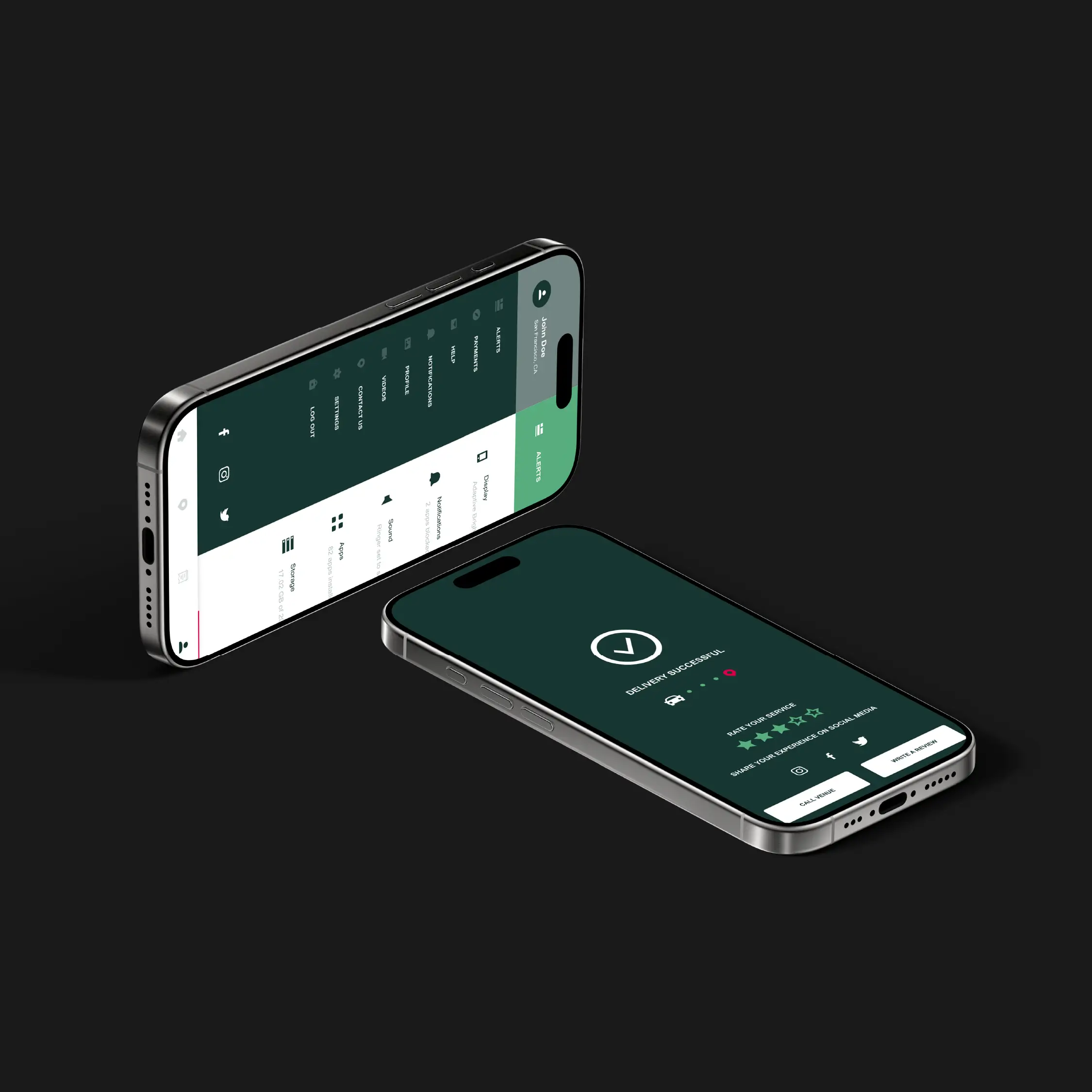
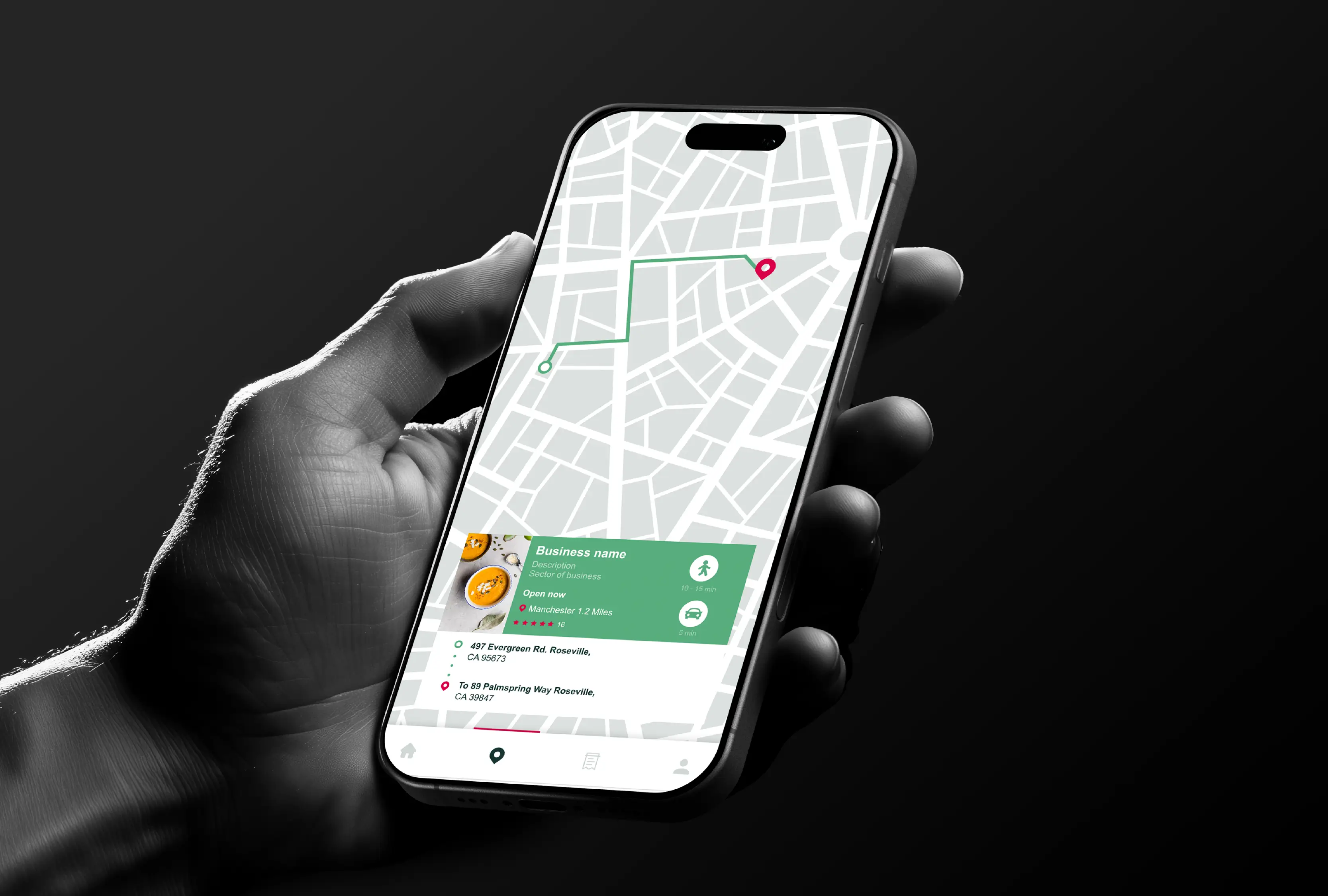
Top 5 UX Wins
A snapshot of how I led end-to-end UX, product, and brand design for a complex two-sided platform. These wins highlight strategic decision-making, intuitive experience design, and scalable systems thinking in a highly competitive market.
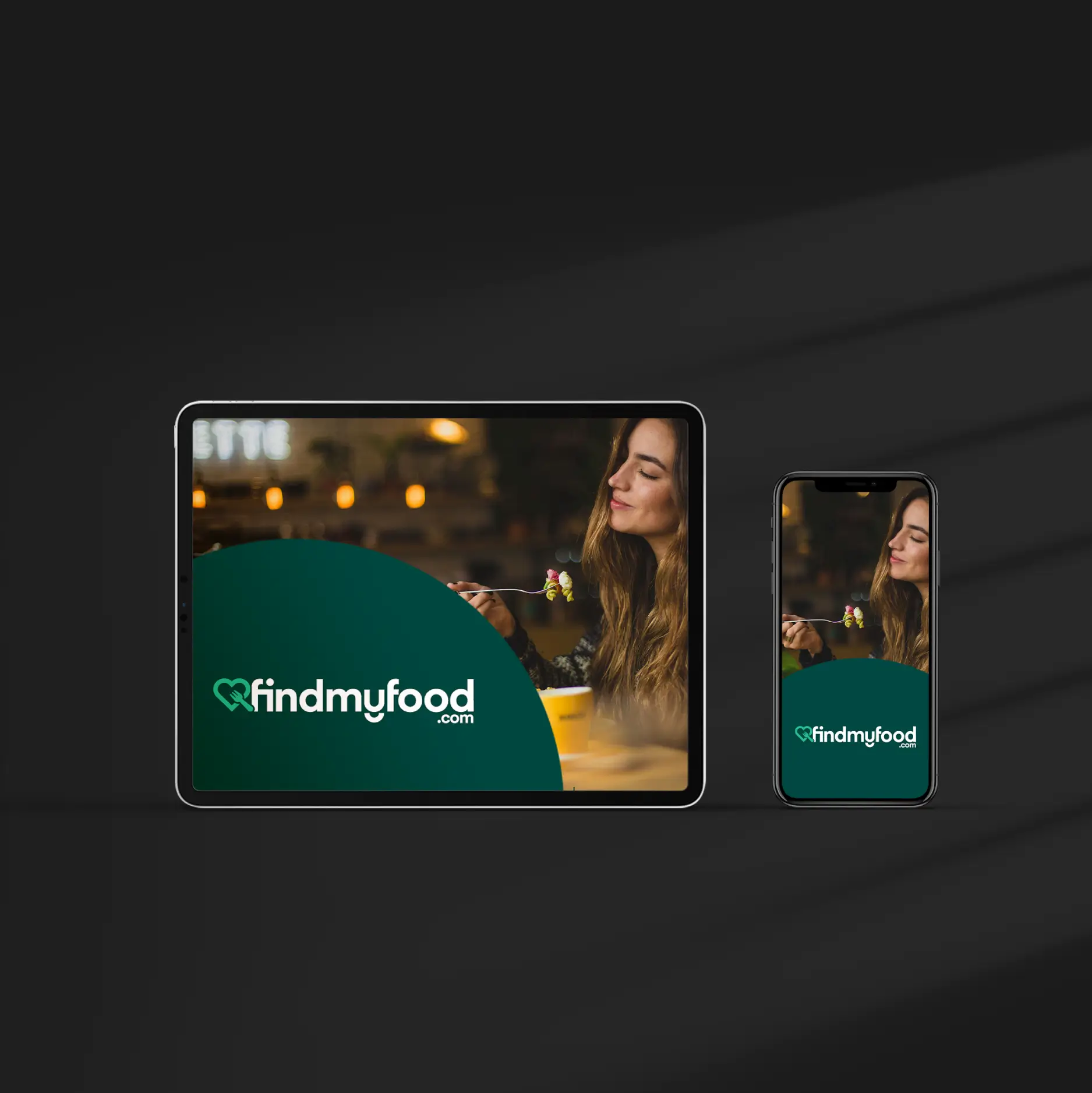
01
Built a complete brand identaty
What I did:
Designed the complete FMF brand identity, including logo, colour system, typography, iconography and tone of voice Created comprehensive brand guidelines to ensure consistency across customer and retailer apps, marketing, and future product expansion
Why it matters:
Established instant credibility in a highly competitive market dominated by well-known brands Reduced design and development friction by creating a shared visual language early Positioned FMF as a premium yet accessible platform, supporting both acquisition and long-term growth
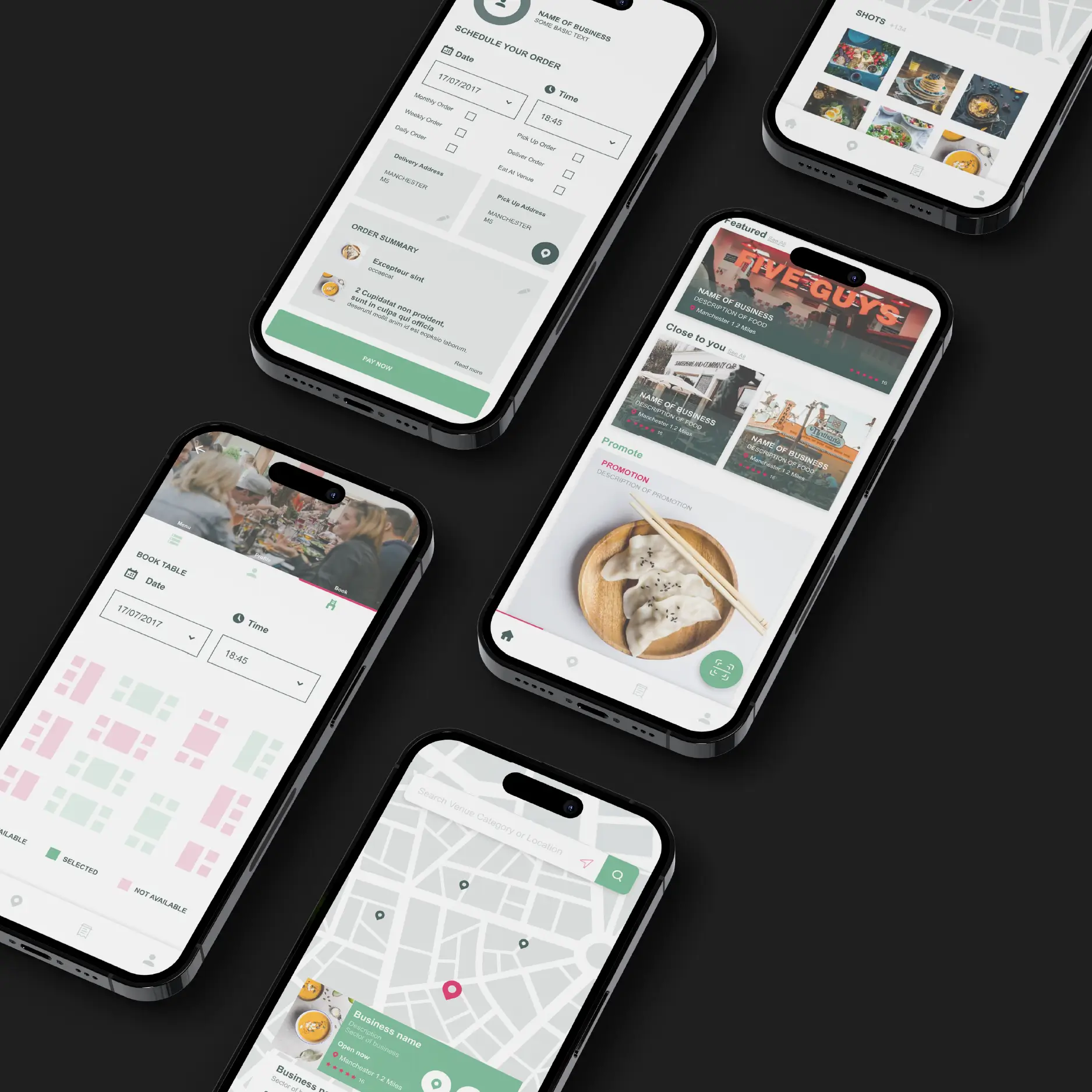
02
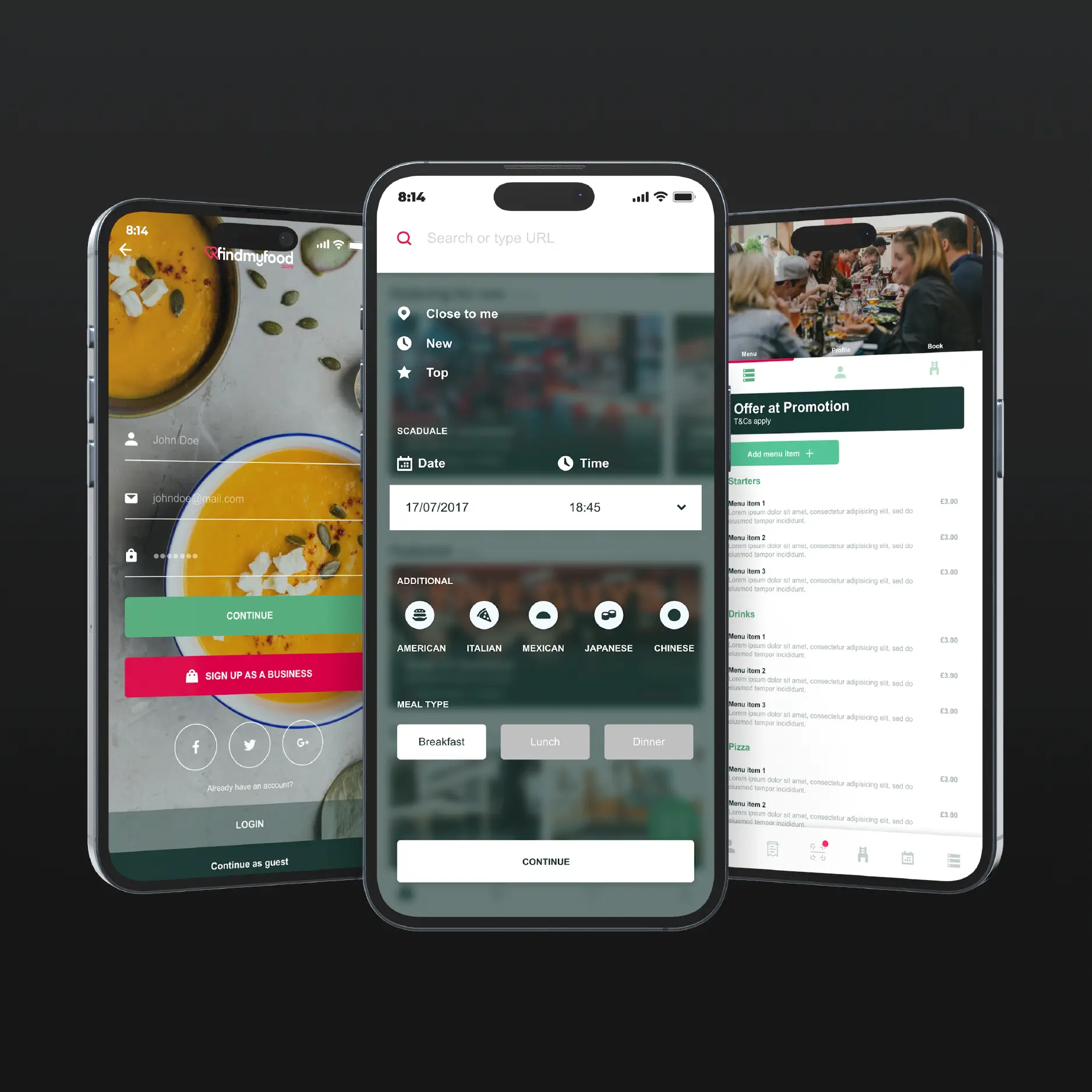
Designed a customer-focused app
What I did:
Designed a dedicated customer app focused on ordering, discovery, booking and in-venue experiences Mapped end-to-end user journeys covering delivery, pickup, table booking and QR menu ordering Prioritised speed, clarity and minimal cognitive load across search, checkout and booking flows
Why it matters:
Lowered friction across multiple use cases that typically require separate apps Increased conversion potential by reducing steps and decision fatigue Created a seamless experience that differentiated FMF from single-purpose competitors
03
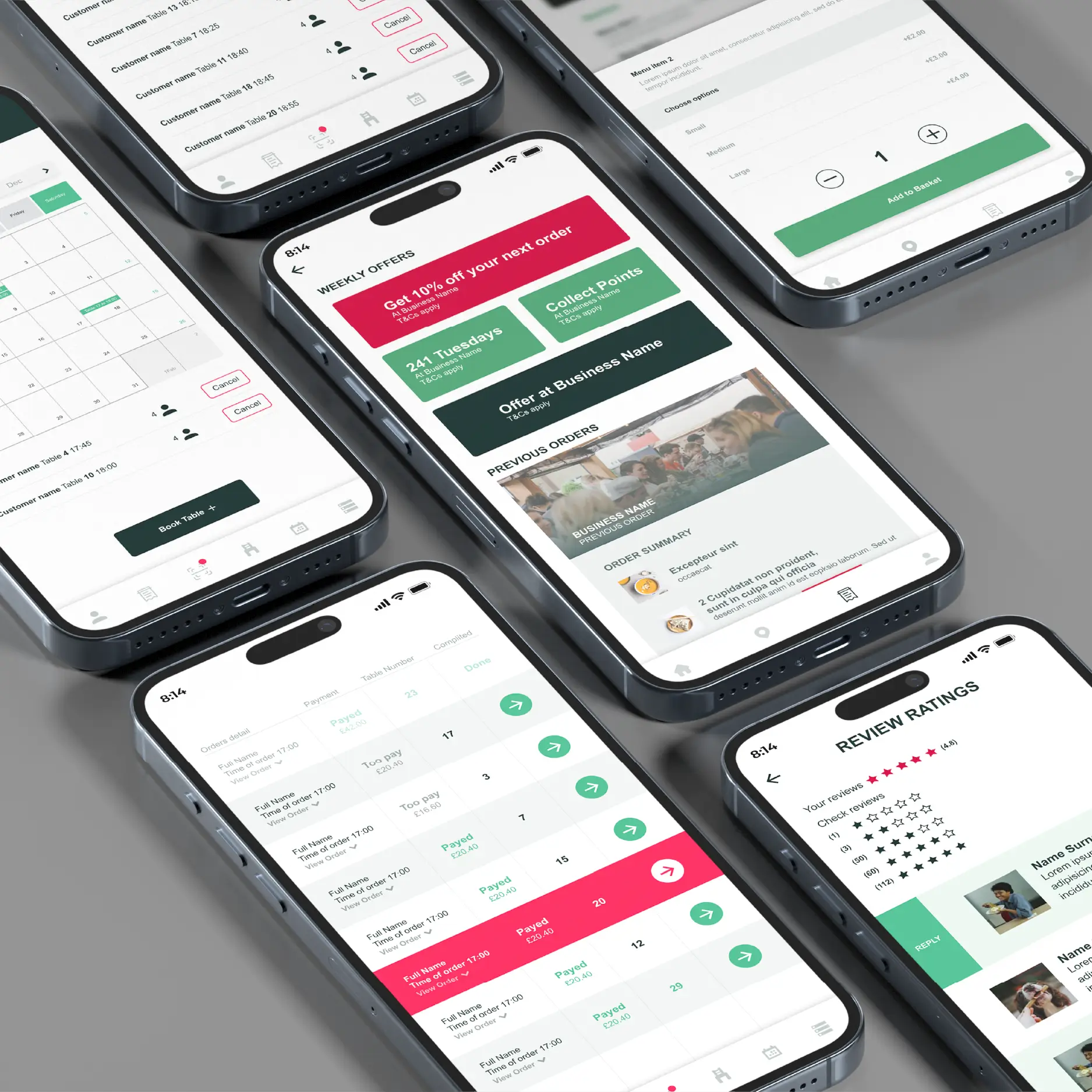
Created a separate retailer app
What I did:
Designed a standalone retailer app focused on operational efficiency and control Built dashboards for menu management, table bookings, orders, subscriptions and business insights Structured the experience around real restaurant workflows rather than consumer patterns
Why it matters:
Addressed a major market gap where restaurants often juggle multiple disconnected tools Improved onboarding and adoption by making business management intuitive, not technical Opened a scalable revenue model through subscriptions and premium business features
04
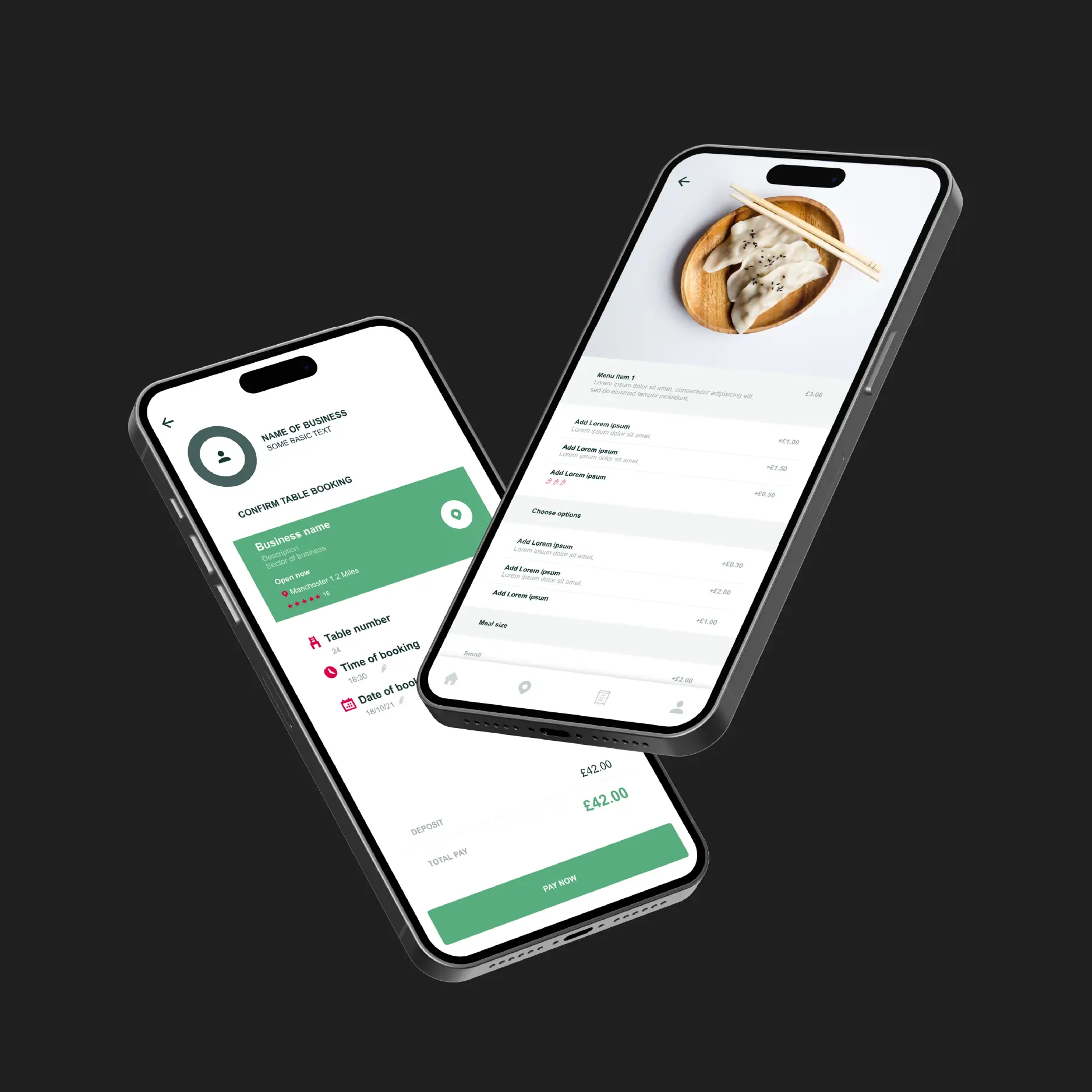
Delivered intuitive, feature-rich UX
What I did:
Designed complex functionality (multi-ordering, bookings, QR menus, dashboards) Applied UX frameworks (AIDA, CRO, RACE, SOSTAC principles) to prioritise clarity and action Ensured accessibility and consistency across user types and contexts
Why it matters:
Enabled advanced functionality without overwhelming users Reduced learning curves for both customers and restaurant staff Increased retention by making FMF feel simple despite its depth
05
Led end-to-end product design
What I did:
Owned UX, UI and product design across the full ecosystem within a 3-month delivery window Worked closely with founders to define MVP scope and prioritise high-impact features Designed with limited user data during COVID, relying on competitive analysis, heuristics and rapid iteration
Why it matters:
Demonstrates senior-level decision-making in ambiguous, high-pressure environments Shows ability to balance speed, quality and business goals Proves readiness for higher-level roles requiring ownership, strategy and execution
Want to
see more?
Browse my other projects to explore how I approach UX, UI, and product design across a range of challenges.
The Fragrance Shop
Freagra Website
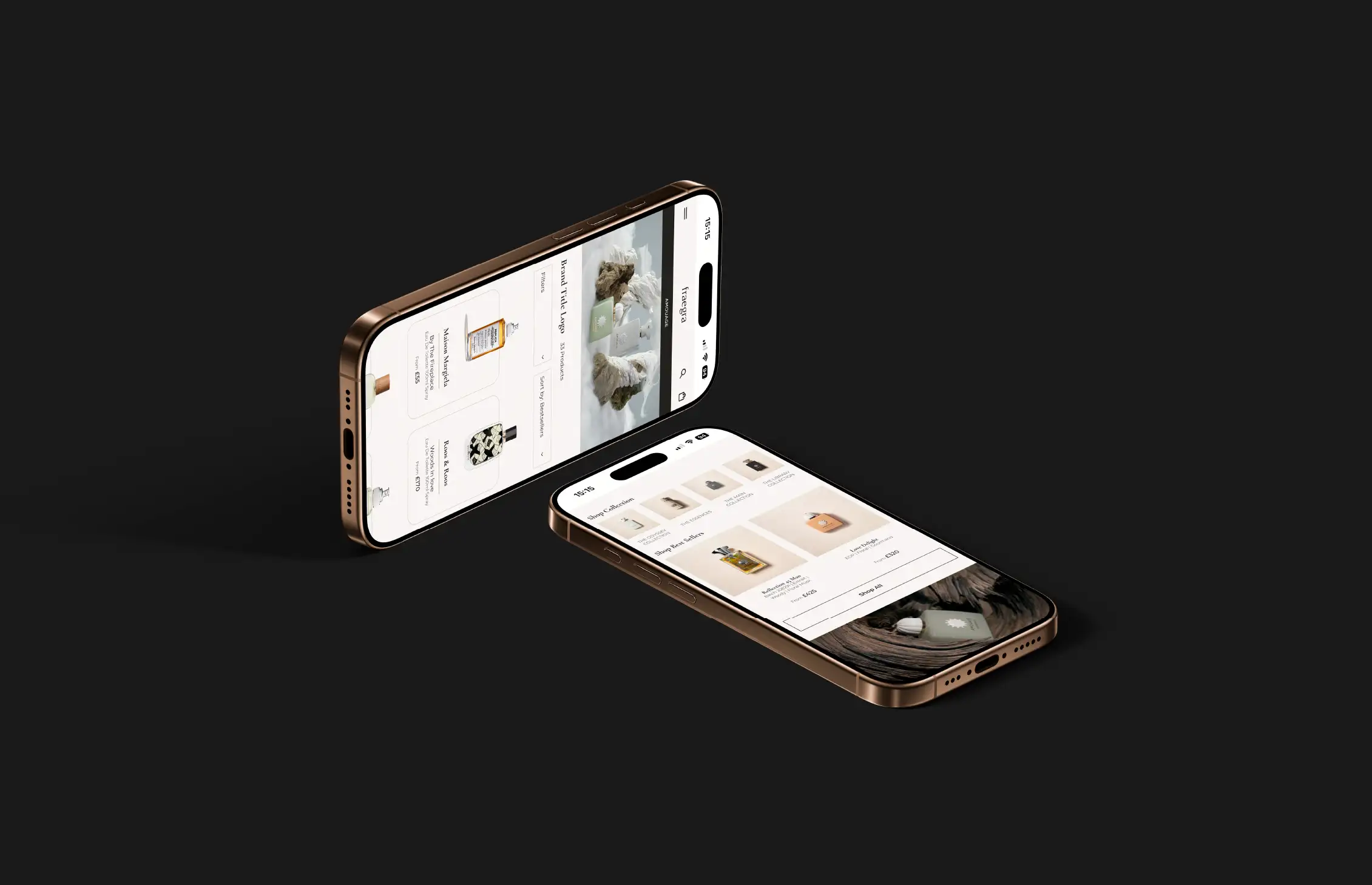
An end-to-end UX project for Freagra, designing a refined and intuitive premium fragrance journey. I shaped the full experience from initial concepts to developer handover, helping users browse and purchase high-value scents with confidence.
Find My Food app
Designed Find My Food from the ground up shaping its brand identity, user flows, and UI to make discovering and ordering meals simple, intuitive, and enjoyable.
Overview
Situation
Context
My role
I acted as Product Owner and Lead UX / UI Designer, with full ownership across:
Product strategy & vision
UX research & journey design
UI design & interaction patterns
Brand creation from the ground up
Collaboration with founders and developers
I worked closely with the founders to define product-market fit, prioritise features, and design an experience capable of competing with Uber Eats, Deliveroo, and Just Eat.
Level of ownership
Defined the end-to-end experience for both customers and restaurants
Balanced business goals, technical constraints, and usability
Made prioritisation decisions under tight timelines and limited data
Designed the entire ecosystem, not just screens
This was effectively a 0→1 product, requiring both strategic thinking and hands-on execution.
Situation Analysis
Market landscape
The food-tech space was highly saturated, dominated by platforms focused almost exclusively on delivery.
Competitors:
Uber Eats
Deliveroo
Just Eat
Key gap in the market
Existing platforms:
Fragmented the customer journey
Prioritised delivery over dining experiences
Created operational overhead for restaurants (multiple tools for menus, bookings, QR ordering, delivery)
Opportunity
Create a single, seamless platform that supports:
Customers: delivery, pickup, reservations, dine-in menus, QR ordering
Restaurants: menu management, table bookings, order management, and customer engagement all in one system
Core Problems to Solve
Customer-side problems
Multiple apps needed for different dining needs
Friction between booking, ordering, and dining
Poor in-restaurant digital experiences
Limited discovery beyond delivery listings
Restaurant-side problems
Disconnected systems for:
Bookings
Menus
Delivery platforms
High onboarding friction
Limited control over branding and customer experience
Operational inefficiencies during busy service periods
Strategic problem
How do we differentiate against billion-pound competitors without competing purely on scale or price?
Objectives
Even without hard metrics (due to COVID and early stage), we defined clear directional goals:
Customer goals
Reduce friction across booking → ordering → dining
Increase conversion through simplified journeys
Improve retention by becoming a “default” food app
Restaurant goals
Simplify onboarding and daily operations
Reduce dependency on multiple third-party tools
Improve table utilisation and order management
Business goals
Position FMF as a one-stop ecosystem
Differentiate clearly vs Uber Eats / Deliveroo
Build long-term platform stickiness on both sides
Strategy
Product strategy
Rather than competing on delivery speed, FMF focused on:
Experience breadth
Journey continuity
Operational simplicity
Key strategic pillars
One platform, multiple use cases
Equal focus on customers and restaurants
Consistent UX across delivery, booking, and dine-in
Low learning curve despite feature richness
User Journey & Experience Design
Reach – Discovery & Entry
Unified search for:
Restaurants
Cuisine
Delivery / pickup / dine-in
Smart filters based on intent (eat now vs book later)
Clear value proposition from first interaction
Act – Engagement
Browse menus before booking or ordering
View availability and book tables seamlessly
QR code scanning for instant in-restaurant access
Reduced decision fatigue through progressive disclosure
Convert – Ordering & Booking
Single checkout logic across:
Delivery
Pickup
Dine-in pre-orders
Familiar patterns to reduce cognitive load
Clear feedback and confirmation states
Engage – Retention & Loyalty
Favourites & saved restaurants
Account history across all dining types
Designed foundations for loyalty and repeat usage
Design
Process
Features I Led & Designed
I was responsible for the full product experience, including:
Customer-facing
Search & discovery
Filtering & intent-based navigation
Booking flow
Delivery & pickup ordering
QR menu experience
Checkout & order confirmation
Account, favourites, and history
End-to-end journey mapping
Restaurant-facing
Menu creation & management
Booking and table organisation
Order visibility and status
Dashboard information architecture
Scalable patterns for future features
Prioritisation & Decision-Making
Given:
3-month deadline
Limited development resources
Minimal user data (COVID constraints)
I used RICE-style prioritisation to balance:
Reach: how many users benefit
Impact: effect on conversion or usability
Confidence: validated vs assumed needs
Effort: development complexity
This ensured:
Core journeys shipped first
Feature bloat avoided
A coherent MVP that still felt “premium”
Constraints & How I Designed Around Them
Constraint: Limited user research
Response:
Lean research methods
Competitive analysis
Pattern benchmarking
Founder insights + rapid iteration
Constraint: Feature-heavy product
Response:
Progressive disclosure
Clear hierarchy of intent
Familiar interaction patterns to reduce learning curve
Constraint: Short timeline
Response:
Strong design system foundations
Reusable components
Early alignment with developers
Outcomes & Impact
While quantitative metrics were limited, the project delivered:
A fully designed, scalable multi-sided platform
Clear differentiation vs delivery-only competitors
Positive founder and stakeholder feedback
A strong foundation for future growth and monetisation
Most importantly, it demonstrated my ability to:
Lead complex, system-level UX
Balance strategy and execution
Design for business, users, and operations simultaneously
Top 5 UX Wins
A snapshot of how I led end-to-end UX, product, and brand design for a complex two-sided platform. These wins highlight strategic decision-making, intuitive experience design, and scalable systems thinking in a highly competitive market.
01
Built a complete brand identaty
What I did:
Designed the complete FMF brand identity, including logo, colour system, typography, iconography and tone of voice Created comprehensive brand guidelines to ensure consistency across customer and retailer apps, marketing, and future product expansion
Why it matters:
Established instant credibility in a highly competitive market dominated by well-known brands Reduced design and development friction by creating a shared visual language early Positioned FMF as a premium yet accessible platform, supporting both acquisition and long-term growth
02
Designed a customer-focused app
What I did:
Designed a dedicated customer app focused on ordering, discovery, booking and in-venue experiences Mapped end-to-end user journeys covering delivery, pickup, table booking and QR menu ordering Prioritised speed, clarity and minimal cognitive load across search, checkout and booking flows
Why it matters:
Lowered friction across multiple use cases that typically require separate apps Increased conversion potential by reducing steps and decision fatigue Created a seamless experience that differentiated FMF from single-purpose competitors
03
Created a separate retailer app
What I did:
Designed a standalone retailer app focused on operational efficiency and control Built dashboards for menu management, table bookings, orders, subscriptions and business insights Structured the experience around real restaurant workflows rather than consumer patterns
Why it matters:
Addressed a major market gap where restaurants often juggle multiple disconnected tools Improved onboarding and adoption by making business management intuitive, not technical Opened a scalable revenue model through subscriptions and premium business features
04
Delivered intuitive, feature-rich UX
What I did:
Designed complex functionality (multi-ordering, bookings, QR menus, dashboards) Applied UX frameworks (AIDA, CRO, RACE, SOSTAC principles) to prioritise clarity and action Ensured accessibility and consistency across user types and contexts
Why it matters:
Enabled advanced functionality without overwhelming users Reduced learning curves for both customers and restaurant staff Increased retention by making FMF feel simple despite its depth
05
Led end-to-end product design
What I did:
Owned UX, UI and product design across the full ecosystem within a 3-month delivery window Worked closely with founders to define MVP scope and prioritise high-impact features Designed with limited user data during COVID, relying on competitive analysis, heuristics and rapid iteration
Why it matters:
Demonstrates senior-level decision-making in ambiguous, high-pressure environments Shows ability to balance speed, quality and business goals Proves readiness for higher-level roles requiring ownership, strategy and execution
Want to
see more?
Browse my other projects to explore how I approach UX, UI, and product design across a range of challenges.
The Fragrance Shop
Freagra Website
An end-to-end UX project for Freagra, designing a refined and intuitive premium fragrance journey. I shaped the full experience from initial concepts to developer handover, helping users browse and purchase high-value scents with confidence.
Find My Food app
Designed Find My Food from the ground up shaping its brand identity, user flows, and UI to make discovering and ordering meals simple, intuitive, and enjoyable.
Overview
Situation
Context
My role
I acted as Product Owner and Lead UX / UI Designer, with full ownership across:
Product strategy & vision
UX research & journey design
UI design & interaction patterns
Brand creation from the ground up
Collaboration with founders and developers
I worked closely with the founders to define product-market fit, prioritise features, and design an experience capable of competing with Uber Eats, Deliveroo, and Just Eat.
Level of ownership
Defined the end-to-end experience for both customers and restaurants
Balanced business goals, technical constraints, and usability
Made prioritisation decisions under tight timelines and limited data
Designed the entire ecosystem, not just screens
This was effectively a 0→1 product, requiring both strategic thinking and hands-on execution.
Situation Analysis
Market landscape
The food-tech space was highly saturated, dominated by platforms focused almost exclusively on delivery.
Competitors:
Uber Eats
Deliveroo
Just Eat
Key gap in the market
Existing platforms:
Fragmented the customer journey
Prioritised delivery over dining experiences
Created operational overhead for restaurants (multiple tools for menus, bookings, QR ordering, delivery)
Opportunity
Create a single, seamless platform that supports:
Customers: delivery, pickup, reservations, dine-in menus, QR ordering
Restaurants: menu management, table bookings, order management, and customer engagement all in one system
Core Problems to Solve
Customer-side problems
Multiple apps needed for different dining needs
Friction between booking, ordering, and dining
Poor in-restaurant digital experiences
Limited discovery beyond delivery listings
Restaurant-side problems
Disconnected systems for:
Bookings
Menus
Delivery platforms
High onboarding friction
Limited control over branding and customer experience
Operational inefficiencies during busy service periods
Strategic problem
How do we differentiate against billion-pound competitors without competing purely on scale or price?
Objectives
Even without hard metrics (due to COVID and early stage), we defined clear directional goals:
Customer goals
Reduce friction across booking → ordering → dining
Increase conversion through simplified journeys
Improve retention by becoming a “default” food app
Restaurant goals
Simplify onboarding and daily operations
Reduce dependency on multiple third-party tools
Improve table utilisation and order management
Business goals
Position FMF as a one-stop ecosystem
Differentiate clearly vs Uber Eats / Deliveroo
Build long-term platform stickiness on both sides
Strategy
Product strategy
Rather than competing on delivery speed, FMF focused on:
Experience breadth
Journey continuity
Operational simplicity
Key strategic pillars
One platform, multiple use cases
Equal focus on customers and restaurants
Consistent UX across delivery, booking, and dine-in
Low learning curve despite feature richness
User Journey & Experience Design
Reach – Discovery & Entry
Unified search for:
Restaurants
Cuisine
Delivery / pickup / dine-in
Smart filters based on intent (eat now vs book later)
Clear value proposition from first interaction
Act – Engagement
Browse menus before booking or ordering
View availability and book tables seamlessly
QR code scanning for instant in-restaurant access
Reduced decision fatigue through progressive disclosure
Convert – Ordering & Booking
Single checkout logic across:
Delivery
Pickup
Dine-in pre-orders
Familiar patterns to reduce cognitive load
Clear feedback and confirmation states
Engage – Retention & Loyalty
Favourites & saved restaurants
Account history across all dining types
Designed foundations for loyalty and repeat usage
Design
Process
Features I Led & Designed
I was responsible for the full product experience, including:
Customer-facing
Search & discovery
Filtering & intent-based navigation
Booking flow
Delivery & pickup ordering
QR menu experience
Checkout & order confirmation
Account, favourites, and history
End-to-end journey mapping
Restaurant-facing
Menu creation & management
Booking and table organisation
Order visibility and status
Dashboard information architecture
Scalable patterns for future features
Prioritisation & Decision-Making
Given:
3-month deadline
Limited development resources
Minimal user data (COVID constraints)
I used RICE-style prioritisation to balance:
Reach: how many users benefit
Impact: effect on conversion or usability
Confidence: validated vs assumed needs
Effort: development complexity
This ensured:
Core journeys shipped first
Feature bloat avoided
A coherent MVP that still felt “premium”
Constraints & How I Designed Around Them
Constraint: Limited user research
Response:
Lean research methods
Competitive analysis
Pattern benchmarking
Founder insights + rapid iteration
Constraint: Feature-heavy product
Response:
Progressive disclosure
Clear hierarchy of intent
Familiar interaction patterns to reduce learning curve
Constraint: Short timeline
Response:
Strong design system foundations
Reusable components
Early alignment with developers
Outcomes & Impact
While quantitative metrics were limited, the project delivered:
A fully designed, scalable multi-sided platform
Clear differentiation vs delivery-only competitors
Positive founder and stakeholder feedback
A strong foundation for future growth and monetisation
Most importantly, it demonstrated my ability to:
Lead complex, system-level UX
Balance strategy and execution
Design for business, users, and operations simultaneously
Top 5 UX Wins
A snapshot of how I led end-to-end UX, product, and brand design for a complex two-sided platform. These wins highlight strategic decision-making, intuitive experience design, and scalable systems thinking in a highly competitive market.
01
Built a complete brand identaty
What I did:
Designed the complete FMF brand identity, including logo, colour system, typography, iconography and tone of voice Created comprehensive brand guidelines to ensure consistency across customer and retailer apps, marketing, and future product expansion
Why it matters:
Established instant credibility in a highly competitive market dominated by well-known brands Reduced design and development friction by creating a shared visual language early Positioned FMF as a premium yet accessible platform, supporting both acquisition and long-term growth
02
Designed a customer-focused app
What I did:
Designed a dedicated customer app focused on ordering, discovery, booking and in-venue experiences Mapped end-to-end user journeys covering delivery, pickup, table booking and QR menu ordering Prioritised speed, clarity and minimal cognitive load across search, checkout and booking flows
Why it matters:
Lowered friction across multiple use cases that typically require separate apps Increased conversion potential by reducing steps and decision fatigue Created a seamless experience that differentiated FMF from single-purpose competitors
03
Created a separate retailer app
What I did:
Designed a standalone retailer app focused on operational efficiency and control Built dashboards for menu management, table bookings, orders, subscriptions and business insights Structured the experience around real restaurant workflows rather than consumer patterns
Why it matters:
Addressed a major market gap where restaurants often juggle multiple disconnected tools Improved onboarding and adoption by making business management intuitive, not technical Opened a scalable revenue model through subscriptions and premium business features
04
Delivered intuitive, feature-rich UX
What I did:
Designed complex functionality (multi-ordering, bookings, QR menus, dashboards) Applied UX frameworks (AIDA, CRO, RACE, SOSTAC principles) to prioritise clarity and action Ensured accessibility and consistency across user types and contexts
Why it matters:
Enabled advanced functionality without overwhelming users Reduced learning curves for both customers and restaurant staff Increased retention by making FMF feel simple despite its depth
05
Led end-to-end product design
What I did:
Owned UX, UI and product design across the full ecosystem within a 3-month delivery window Worked closely with founders to define MVP scope and prioritise high-impact features Designed with limited user data during COVID, relying on competitive analysis, heuristics and rapid iteration
Why it matters:
Demonstrates senior-level decision-making in ambiguous, high-pressure environments Shows ability to balance speed, quality and business goals Proves readiness for higher-level roles requiring ownership, strategy and execution
Want to
see more?
Browse my other projects to explore how I approach UX, UI, and product design across a range of challenges.
The Fragrance Shop
Freagra Website
An end-to-end UX project for Freagra, designing a refined and intuitive premium fragrance journey. I shaped the full experience from initial concepts to developer handover, helping users browse and purchase high-value scents with confidence.